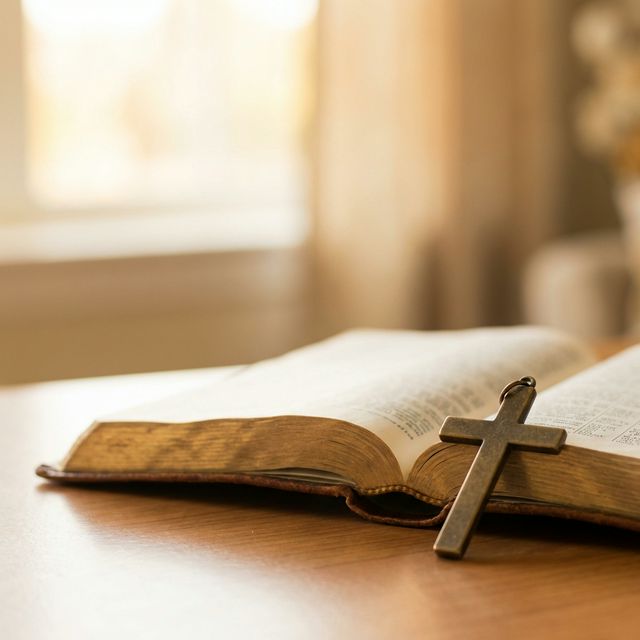

A dusty Bible on the nightstand often feels heavier than it actually weighs. The guilt piles up every day you don't pick it up. You know you need to be getting back into bible reading, but the gap between where you are and where you want to be feels massive.
You might think you need a theology degree or three hours of silence to fix this. You don't. You just need to lower the bar until hitting it becomes inevitable.
Frankly, most people fail because they try to sprint after sitting on the couch for six months. They commit to reading five chapters a day, miss one morning, feel like a failure, and quit. We're going to fix that. God isn't looking for your performance; He's looking for your presence.
Here is how to restart your quiet time without the guilt trip.
The Psychology of the Slump
We need to be honest about why we stop. Usually, it isn't because we stopped believing. It's because life got loud. Maybe you had a baby, or perhaps work went crazy. Maybe you moved houses.
The habit broke.
The real problem is what happens next. We feel shame. We look at the Bible and think, "I should have read that yesterday." That shame builds a wall. We avoid the Bible because it reminds us of our failure.
This cycle kills your progress. It turns a relationship into a checklist.
You have to kill the perfectionism. If you miss a meal, you don't starve yourself for the next week to "make up for it." You just eat the next meal. Treat Scripture the same way.
A Grace-Filled Plan for Getting Back Into Bible Reading
This isn't a challenge to read the whole Bible in a year. This is a 5-day start. The goal is simply to touch the text again.
Follow this exact schedule. Don't add to it. Don't try to be a hero.
Day 1: The Setup (0 Minutes of Reading)
Today, don't read. Your only job is to locate your Bible.
Find it. Dust it off. Put it open on the table or nightstand where you'll see it tomorrow. If you use an app, move the icon to your home screen so it's the first thing you see.
Set the stage. Put a pen there. Put a coaster for your coffee there. Make the space inviting.
That's it. You're done for today. You made a physical preparation for a spiritual act.
Day 2: The One Verse Rule
Go to your spot and sit down.
Open to Psalm 23. Read the first sentence: "The Lord is my shepherd; I shall not want."
Close the book.
You might feel the urge to keep reading, but fight it. Stop while you still want more. You're training your brain that this is easy, safe, and enjoyable. You want to leave the table feeling successful rather than drained.
Day 3: The 5-Minute Scan
Return to your spot. Open to John 1.
Read until you find something that makes you pause. Maybe it's verse 4: "In him was life, and the life was the light of men."
Read it twice. Whisper it out loud.
Ask one question: "What does this tell me about Jesus?"
Answer it in your head. Close the book. You are building the muscle of observation without the burden of heavy study.
Day 4: The Sticky Note
Today we add a tiny output.
Open to Philippians 4. Read casually. When a phrase jumps out at you, write it on a sticky note or an index card.
Put that note on your bathroom mirror or your laptop keyboard.
Throughout the day, look at it. You are taking the word with you. This breaks the idea that Bible reading only happens in a chair. It mixes the scripture into your actual life.
Day 5: The Commitment
You've shown up for four days. The scary wall is gone. Now you need a plan that lasts.
Today, pick a bible reading plan. Don't pick "The Bible in 90 Days." Pick something that requires 10 minutes or less.
Commit to it for just one week. If you can do a week, you can do a month.
Choosing the Right Bible Reading Plan
The biggest mistake people make is starting on page one. Genesis is great, and Exodus is exciting. Then you hit Leviticus, and your habit dies a quiet death among the laws about mildew and grain offerings.
When you're restarting, you need momentum. You need easy wins.
Here is a comparison of different approaches to help you decide.
| Approach | Difficulty | Best For | Risk Factor |
|---|---|---|---|
| Gospels First (John or Mark) | Low | Reconnecting with Jesus relationally | Very low risk. It is narrative and gripping. |
| Psalms & Proverbs | Low | Emotional support and wisdom | Can feel disjointed if you want a continuous story. |
| Bible in a Year | High | People of routine who love structure | High burnout rate. If you fall behind, you quit. |
| Chronological Plan | Medium | History buffs who want the timeline | Can get bogged down in repetitive sections of Kings/Chronicles. |
| Lectionary | Medium | Feeling connected to the global church | Might feel restrictive or confusing to navigate. |
For a reset, I highly recommend starting with the Gospel of John. It's relational, profound, and centers heavily on the love of Christ. It heals the heart while it stimulates the mind.
How to Start Reading Bible Again Without Distractions
Everyone wants your attention. Netflix wants your eyes, and Instagram wants your scroll. Your quiet time is under attack before you even sit down.
You need a defense strategy.
The "Airplane Mode" Rule
If you use your phone for the Bible, you are walking through a minefield. One notification from Gmail and your prayer time is over.
If you must use a phone app, turn on Airplane Mode before you open the Bible app. Don't turn it off until you're done.
Better yet, get a paper Bible. Paper has no notifications. It has no battery life issues. It doesn't track your data; it just offers the text. There is a different neurological connection when you physically turn a page compared to swiping a screen.
The "Bad Coffee" Principle
You don't need the perfect latte to read the Word. You don't need the perfect sunrise.
Sometimes we procrastinate because the setting isn't "Pinterest-perfect" enough. Read in your car in the parking lot at work. Read while the pasta water boils. Read in the school pickup line.
Imperfect reading is infinitely better than perfect reading that never happens.
Christian Habits That Stick
Motivation gets you started, but habit keeps you going. To make this stick, you need to attach it to something you already do. This is called "habit stacking."
- Coffee + Bible: You can't have your morning coffee until your Bible is open.
- Pillow + Bible: You can't put your head on the pillow at night until you read one verse.
- Commute + Audio: You listen to Scripture on the drive to work every morning.
The goal is to stop making decisions. If you have to decide when to read every day, you will eventually decide "no." If it's anchored to your coffee, the choice is already made.
Tools for Your Quiet Time Routine
You don't need to buy a bunch of accessories, but sometimes a new tool helps spark excitement.
1. Highlighters That Don't Bleed
There is something satisfying about marking up your text. It makes the book feel like yours. Get a set of dry highlighters or Bible-safe pens. Mark words that repeat. Mark promises you need to remember.
2. A Distraction Journal
This is a game-changer. When you sit to read, your brain will suddenly remind you of five things you need to do. "Buy milk." "Email the boss." "Call mom."
Don't fight these thoughts. Write them down in a notebook next to you. Once they are on paper, your brain can let them go and return to the text.
3. Audio Bibles
If you are an auditory learner, reading might feel like a chore. That is okay. Faith comes by hearing.
Use an app like Dwell or YouVersion. Listen while you walk the dog. This counts. Don't let anyone tell you that "real" Bible reading only happens with your eyes.
Overcoming the "Leviticus Wall"
Eventually, you will hit a boring part. You will hit a list of genealogies or complex laws.
When this happens, change your lens. Don't look for immediate application. You probably won't find a life lesson in a list of names.
Instead, look for faithfulness.
Why are these names here? Because God remembered them. He cares about individuals. He keeps His promises to families.
If you get truly stuck, fast forward. It's allowed. Jump to a Psalm to refresh your spirit, then go back to the hard stuff later. The goal is connection, not misery.
The Role of Community
Reading alone is hard. We were made for community.
Text a friend. "Hey, I'm reading through Mark. Want to read one chapter a day with me?"
You don't need a formal meeting. You don't need a workbook. You just need a text message check-in. "Read Mark 4 today. The part about the seeds was crazy."
Knowing someone else is doing it provides a gentle pressure that keeps you moving on the days you don't feel like it.
Dealing with Doubts
Sometimes we avoid the Bible because we are afraid of what we'll find. Or we have questions that scare us.
"What if I don't agree with this part?"
"What if this confuses me?"
Bring those questions to the text. Wrestle with them. God is big enough to handle your confusion. He isn't fragile.
Write your questions in the margin. "God, I don't get this." That is a prayer. That is honest interaction. It's far better than pretending you grasp it when you don't.
Moving Forward
Scripture isn't a textbook to be mastered. It's a meal to be eaten.
Some days it's a feast. Some days it's a quick snack on the run. Both nourish you.
The 5-Day Reset is just the start. You will fall off again. That's a guarantee. You're human.
When you do, don't waste time on guilt. Don't waste time analyzing why you are a bad Christian. Just go back to Day 1. Find the book. Open it. Read one verse.
You are always just one verse away from a fresh start.