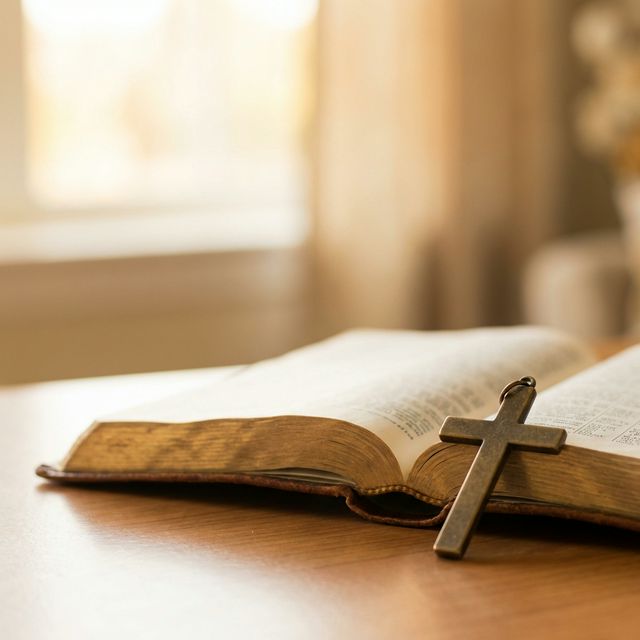

A mom in Nashville sat at her kitchen table for three months. She stared at a big leather book but felt too scared to open it. She thought she needed a degree to get the point of the words inside. She felt she needed a special feeling to be worthy. The reality is much simpler. God wants to talk to you. You don't need a diploma to hear Him.
Bible Study for Women Beginners: Breaking Through the Fear
Starting a bible study for women beginners often feels like trying to climb a mountain without any gear. You see other women at church with their highlighted pages and fancy journals. You hear them quote verses like it's their first language. It makes you feel like you are behind. You might feel like you missed a class that everyone else attended.
This feeling of being less than is a wall many people hit. Many women deal with a spirit of fear that tells them they aren't smart enough or holy enough to grasp the text. A Beloved Women article on intimidation explains that fear shifts your focus to yourself rather than toward God. When you focus on what you don't know, you forget that the Bible was written for regular people. It was written for shepherds, fishermen, and stay-at-home moms.
The Bible is a library. It isn't just one single book. It has 66 different books inside it. If you try to read it from start to finish like a novel, you might get stuck. You will hit some very old laws in Leviticus and want to quit. That is the quickest way to lose your momentum. Instead, you need a plan that fits your life.
Beginners often ask where to begin. My advice is to go straight to the Gospels. These are the books about Jesus: Matthew, Mark, Luke, and John. If you want to know the heart of the Bible, you have to know Jesus. Once you see how He treated women, your fear will start to melt away. He was kind to the woman at the well. He was patient with Martha. He will be patient with you too.
Choosing Your First Bible Translation
You walk into a bookstore and see a wall of Bibles. Some say KJV, some say ESV, and others say NLT. It looks like alphabet soup. Picking the wrong one can make your first bible study for women feel like reading a hard textbook in a different language. You want a balance between being correct and being easy to use.
If you grew up hearing words like "thee" and "thou," you might think the King James Version (KJV) is the only real Bible. But for a beginner, that old English is a massive hurdle. You spend more time looking up words than actually hearing what God is saying. Modern versions are not watered down. They are just translated into the way we actually talk today.
The New Living Translation (NLT) is a top pick for many beginners. It is a thought-for-thought translation. This means the experts looked at the original Greek and Hebrew and put the meaning into natural English. It reads like a story. According to this Outreach Magazine feature, audio Bibles help take the pressure off for those who find reading hard. The NLT sounds great when you listen to it.
The New International Version (NIV) is another solid choice. It sits right in the middle. It is literal enough for study but smooth enough for daily reading. Most churches use this version. That makes following a sermon much easier. If you want something more literal, the English Standard Version (ESV) is great. Just be ready for some stiff sentences because it tries to keep the word order of the old languages.
Bible Translation Comparison Table
| Translation | Type | Pros | Cons |
|---|---|---|---|
| NLT | Thought-for-Thought | Very easy to read. It feels like a story. | Less literal. Small details might be lost. |
| NIV | Balanced | Modern language. Widely used in churches. | Updates every few years. |
| ESV | Word-for-Word | Very accurate for study. | Can feel formal or stiff to some. |
| CSB | Optimal Blend | Very clear. Great for writing notes. | Fewer tools than NIV or ESV. |
Check a best bible translations beginners comparison before you buy. This helps you spend your money on a tool you will use every single day.
Essential Supplies for Your Study
You don't need a cart full of art supplies to study the Word. Those pretty photos on Instagram can be a distraction. If you spend forty minutes drawing a flower and two minutes reading the verse, you aren't really studying. You are just doing an art project.
Start with the basics. You need a Bible you aren't afraid to mark up. If you have a family heirloom with gold edges, put it on a shelf. Buy a thinline or a journaling Bible with wide margins. You want space to write your questions and your aha moments. You even need space for your "I don't get this" notes.
Next, get a good pen. Most Bible paper is very thin. If you use a regular pen or a marker, it will bleed through the page. It will ruin the verses on the other side. Look for pens that don't bleed. Many women like Micron pens because they are thin and stay put.
A simple notebook is your best friend. You don't need a fancy guided journal. A plain spiral notebook works great. You can find some bible study notebook ideas for women to keep your thoughts in order. Writing things down helps your brain process the facts better than just reading silently.
Finally, find a quiet spot. This is the hardest thing to get. If you have kids, it might be the bathroom or your car before you go into work. If you like mornings, the kitchen table with coffee is perfect. The spot matters less than showing up every day. You are making space for a talk with God.
Inductive vs. Devotional Study: Which is Better?
There are two main ways to look at your time in the Word. Neither is wrong. They just do different things. As a beginner, you will probably swap between both until you find a rhythm.
Devotional study is like a quick snack. You read a short part, maybe a few verses, and then read a story written by someone else about those verses. It is meant to give you a boost for the day. It is great for busy weeks or when you feel tired. You can check out these easy bible studies for women if you want a guided path.
Inductive study is like a big meal. It takes more work. You look at the text yourself and ask: What does this say? What does it mean? How does it apply to me? This method builds your spiritual strength. It stops you from needing other people to tell you what the Bible says. You start to see the patterns for yourself.
I suggest a mix. Use a devotional on the days you are rushing to get the kids to school. But at least twice a week, sit down for a deeper look. This keeps you from becoming a lazy reader who only knows the famous verses. You want to know the whole story.
The SOAP Method: A Simple Framework
If you don't have a plan, you will just open the Bible to a random page. You will read a verse that makes no sense and then close it. The SOAP method stops this. It gives you a path to follow every time you sit down.
S stands for Scripture. You write out the verse that stood out to you. Don't just read it. Writing it forces your eyes to see every word. You might notice a word like "but" or "therefore" that changes the whole point.
O stands for Observation. What is happening here? Who is talking? Who are they talking to? If you are reading a letter from Paul, remember he was writing to real people with real problems. Try to sum up what you see without adding your own feelings yet. Look at this SOAP bible study method explained with example to see it in action.
A stands for Application. This is where it gets personal. How does this verse change your Monday morning? If the verse is about being kind, who do you need to be kind to? If it is about worry, what are you scared of right now? Be very exact. "I should be nicer" is a bad application. "I will not yell when my husband leaves his shoes in the hall" is a great application.
P stands for Prayer. Talk to God about what you just read. Ask Him for the help to do what the verse says. If the passage made you confused, tell Him that. He isn't mad that you don't get it. Prayer is the seal on your time. It turns facts into a change in your life.
How to Read the Bible for Beginners: Your First 30 Days
Don't try to read the whole Bible in a month. You will fail and feel bad about it. Instead, focus on making it a habit. A successful study is one that actually happens.
In your first week, just read the book of Mark. It is the shortest Gospel. It moves fast from one miracle to the next. Read one chapter a day. It will take you about ten minutes. Don't worry if you don't get everything. Just get used to the voice of the Bible.
In week two, start using the SOAP method. Pick one verse from each chapter of Mark that you liked. Write it out. This is where you move from just reading to actually studying. You will find that you remember the verses much better this way.
By week three, you might feel bored. This is a wall everyone hits. Use these bible study tips for women to stay on track. Change your spot. Read outside. Listen to an audio version while you do chores. Just don't stop.
In week four, try a topical study. If you are struggling with a certain issue, find verses about it. For example, doing a bible study on anxiety for women can help you find peace. This shows you that the Bible is useful for your real life today.
Overcoming the Intimidation Factor
Frankly, the Bible can be weird. There are stories about giant fish and people living to be 900 years old. It is okay to think it is strange. You are reading a book written thousands of years ago in a culture very different from ours.
The biggest mistake beginners make is thinking they have to get it all right away. You don't. Think of it like a new friend. You don't know everything about a new friend after one lunch. It takes years of hanging out to really know them. The Bible is the same. The more you hang out with it, the more the pieces fit.
If you hit a part that makes you feel confused, don't throw the book away. Write a question mark and keep going. Often, the answer shows up a few chapters later. You can also ask a mentor or look it up in a study Bible later. Don't let one confusing verse stop your progress.
Also, remember that you aren't doing this alone. The Holy Spirit is your teacher. Before you open the book, say a simple prayer. Ask God to help you see what He wants you to see. He is more interested in you knowing Him than you are. He will meet you halfway.
Setting a Realistic Schedule That Sticks
The women in the Bible didn't have smartphones or a 9-to-5 job. Your life is busy. If you try to study for an hour at 5:00 AM but you hate mornings, you will quit in three days. You have to be honest about your day.
If you are a night owl, study before bed. If you have a lunch break, use twenty minutes of it. The key is to link your study to a habit you already have. Do you drink coffee every morning? Don't take the first sip until your Bible is open. Do you look at your phone before bed? Read one Psalm first.
Start with the 15-Minute Rule. Tell yourself you will only do fifteen minutes. Anyone can do fifteen minutes. Usually, once you start, you will want to go longer. But the low bar makes it easy to start even when you are tired. Doing it every day is better than doing it for a long time once a week.
If you miss a day, don't try to catch up by reading ten chapters the next day. That will just burn you out. Just pick up where you left off. God isn't keeping a score. He just wants to spend time with you today.
Building Community Around the Word
Studying alone is great, but studying with others is where you really grow. We weren't meant to figure this out by ourselves. Other women have questions you haven't thought of. They have ideas you might miss.
Joining a group can feel scary. You might think they will find out you don't know the books of the Bible in order. The reality is that most of them don't know them either! They are just as nervous as you are. When you feel ready, you can start a small group bible study in your living room with a few friends. It can be as simple as three people eating snacks and talking about one chapter.
A ruth bible study for women is a perfect place to start. It is a beautiful story of hope that is easy to follow. It doesn't need a lot of history knowledge to get the emotions and the lessons.
Community keeps you going. On the mornings when you want to sleep in, knowing that you're meeting a friend will get you out of bed. Plus, it gives you a place to talk about the parts that confuse you. You will realize that everyone else is learning as they go, too.