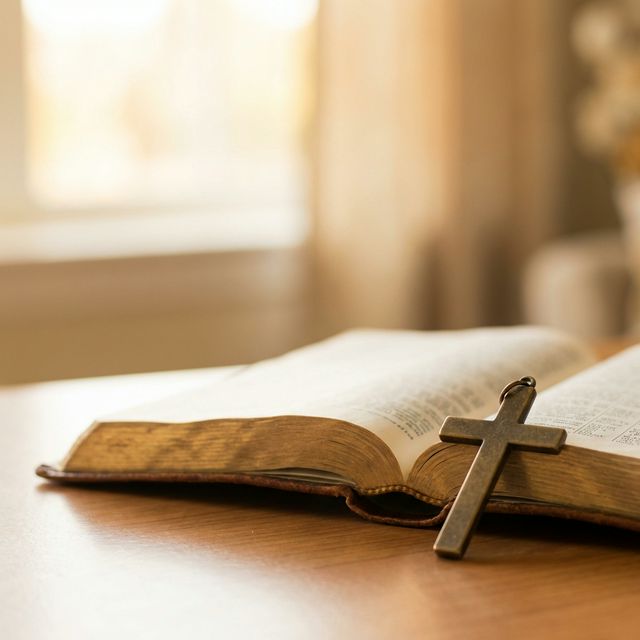

Quiet time gets overcomplicated by almost everyone. You've seen the social media photos featuring leather-bound books and latte art next to an open Bible. Maybe you noticed the hand-lettered margins resembling a design portfolio. While beautiful, maintaining that standard feels impossible.
Copying that style usually leads to quitting within a week.
You need to learn how to journal through scripture without performance pressure. Connecting with the text matters more than how it looks. Remembering what you read five minutes later is the real win. Stop treating this time like an art project. Treat it like writing a letter instead.
Here is a simple, raw method to get words on the page and truth in your heart.
The Problem With "Instagram-Ready" Journaling
Let's talk about the reality of those perfect photos.
Visual journaling makes for a fine hobby, but it acts as a massive barrier for beginners. Focusing on page appearance switches your brain's mode. Instead of processing the text's meaning, you worry about spacing, ink bleed, or sloppy handwriting.
Devotional journaling isn't about pretty pages. It focuses on fixing a messy heart.
Real spiritual growth often looks ugly because it requires confession and confusion. You have to write down things you're afraid to say out loud. Frankly, if your notebook looks perfect, you might be lying to yourself.
Buy a cheap spiral notebook like the ones used in grade school. The paper is thin, the cover is cardboard, and it costs ninety-nine cents.
This serves as the best tool for the job. You won't feel guilty scribbling in it or crossing things out. A cheap pad gives you permission to be messy.
How to Journal Through Scripture: The 3-Question Method
You have coffee, a cheap notebook, and an open Bible. Now what?
Staring at a blank page hurts. Using a framework fixes this instantly. You don't need complicated acronyms; you just need three questions. These prompts force you to examine the text, check your heart, and take action.
Put the date at the top of the page along with the scripture reference (e.g., Psalm 23). Then answer these three items.
1. What does this say about God?
We often read the Bible like it's a self-help book, looking for ourselves in every verse. We usually ask, "How does this fix my problem?"
Stop doing that.
The Bible is a book about God first. Look for Him before looking for yourself.
- Does He show mercy?
- Is He angry at injustice?
- Does He keep a promise?
- Is He creating something new?
Write one sentence about God’s character based on the text. For example, if you're reading the story of the storm, you might write: "Jesus is not worried about the things that terrify me."
2. What does this say about humans (or me)?
Seeing God helps you see yourself clearly. This is where scripture journaling gets personal.
Examine the people in the text or the original audience. How do they act?
- Are they afraid?
- Do they act stubbornly?
- Are they forgetful?
- Are they trying to hide?
You'll usually find that you're just like them. If the Israelites complain about food while God drops manna from the sky, don't judge them. Admit that you complain about your job while God provides your paycheck.
Write down a confession or an observation. "I am quick to forget what God did for me yesterday."
3. How do I respond today?
This part covers the application. Don't make this abstract or write things like, "I should trust God more." That's too vague to measure.
Make it apply to the next 24 hours.
- "I will stop looking at the news this morning and pray instead."
- "I will apologize to my spouse for snapping at them."
- "I will write this verse on a sticky note and put it on my dashboard."
This step turns reading into obedience.
Comparing the Methods: The 3-Question Method vs. The SOAP Method
Countless believers use the SOAP method (Scripture, Observation, Application, Prayer). It's a solid tool, but it often feels too much like homework. Here is how the 3-Question approach compares.
| Feature | SOAP Method | 3-Question Method |
|---|---|---|
| Primary Goal | Structured Study | Relational Connection |
| Mental Load | High (Requires analysis) | Low (Requires honesty) |
| Time Required | 20–30 Minutes | 5–15 Minutes |
| Writer's Block Risk | Moderate | Low |
| Best For | deeply studying a particular topic | Daily maintenance & prayer |
Scripture Journaling for People Who Hate Writing
You might hate writing long paragraphs.
That's fine. You don't need to be a writer to learn how to journal bible verses effectively. If paragraphs feel heavy, change the format.
The List Method
Read a chapter, then just make a list.
- Note every verb associated with God.
- List every command given.
- Write down every promise made.
Lists are fast and help you notice details you would otherwise skip.
The Copywork Method
Sometimes your brain feels too tired to think. When that happens, just copy the text.
Write the verse word for word. This forces you to slow down. You notice punctuation and exact word choices. You can't skim when you're writing. This ancient practice works; kings were once required to write out the law by hand.
The Verse-Prayer Method
Turn the verse into a direct prayer.
- Scripture: "The Lord is my shepherd; I shall not want."
- Journal Entry: "Lord, you are my shepherd. Why do I feel like I am in want? Help me see where you are leading me today."
This method offers the most conversational way to journal, turning a monologue into a dialogue.
10 Bible Journal Prompts (When You Are Stuck)
Sometimes the 3-question method feels stale. Switch it up using these bible journal prompts to jumpstart your brain.
- What particular worry does this verse answer?
- If I truly believed this verse, how would my behavior change right now?
- What word in this passage surprises me?
- Why did God want this particular story recorded?
- What does this passage demand of me?
- Is there a promise here I need to claim?
- Is there a warning here I need to heed?
- What does this text teach me about prayer?
- Who in my life needs to hear this truth today?
- Rewrite this verse in your own words (paraphrase).
Setting the Scene (Without the Clutter)
We mentioned the coffee photos earlier. There's nothing wrong with a nice environment. A warm cup of coffee and a quiet room can help your body relax. Your mind focuses better when your body isn't tense.
Keep the tools simple, though.
- A Bible you can write in: If you're afraid to mark up your fancy leather Bible, get a cheap paperback one. A worn Bible is a loved Bible.
- One good pen: You don't need thirty colored highlighters. Just find one pen that writes smoothly.
- Your phone (in another room): Distance from distraction matters most.
Don't wait for the perfect time. You'll never get a full hour of uninterrupted silence. Write during the ten minutes before the kids wake up, in the car line, or on your lunch break.
The messy, interrupted entry you actually write beats the perfect entry you never get around to.