
Most Bible reading plans are doomed before February even starts. You pick up the new journal and download the app. For four days, everything feels great. Then you miss a Tuesday. Suddenly, you're six chapters behind, and the guilt piles up. Most of us just quit and decide to try again next year.
We have to break this cycle.
You don't need more willpower; you simply need a functional system. A new year bible reading challenge shouldn't test your endurance levels. It ought to help you connect with God without creating a shame spiral.
This guide fixes the faulty "read the whole Bible in a year" loop. We're going to build a habit that actually survives past the third week of January.
Why the Standard "New Year Bible Reading Challenge" Flops
We often treat Bible reading just like a gym membership. We go hard on January 1st but burn out by January 15th.
The real issue is the amount of reading required. Most one-year plans demand three to four chapters a day. While 15 to 20 minutes sounds easy on paper, life gets loud. Kids get sick, and work runs late.
Missing a day on a standard plan means reading eight chapters the next day just to catch up. That creates too much resistance. Most people stare at that backlog, feel defeated, and walk away.
We have to change the objective. It isn't to "finish the book." The point is simply showing up.
The "Soft Launch" Strategy (Start in November)
Frankly, January 1st is the worst possible day to start a new habit. The pressure is way too high.
Smart planners "soft launch" their resolutions instead. Start your new year bible plan in November or December.
Treat this like a beta test. You check the time of day, try out a translation, and see if you prefer audio or text.
Figuring out your routine in November makes January easy. You'll already have momentum while everyone else is still looking for their reading glasses. Pinterest data even shows that searches for January habits spike in early November. People know that preparation wins.
A Better January Reading Plan: The 5-Day Method
Stop trying to read seven days a week. That approach leaves zero room for error.
Adopt a 5-day-a-week schedule instead.
This is the secret weapon for staying consistent. You read Monday through Friday, making Saturday and Sunday "grace days."
If you miss a Tuesday, use Saturday to read that section. Hitting all five days perfectly means you can use the weekend to read a Psalm or just rest. This removes the anxiety of a backlog. You never fall behind because the plan has built-in buffers.
Traditional Plan vs. Low-Friction Plan
| Feature | The "Guilt Trip" Plan | The "Low-Friction" Plan |
|---|---|---|
| Daily Volume | 3-4 Chapters | 1 Chapter (or 5-10 mins) |
| Schedule | 7 Days / Week | 5 Days / Week |
| Missed Days | "Catch up" immediately | Use weekend buffer days |
| Goal | Completion | Consistency |
| Failure Rate | High (Quit by Feb) | Low (Sustainable) |
Choosing Your New Year Christian Routine
You have thousands of options. Don't get paralyzed by choice. Here are three simple paths for a bible reading challenge that works.
1. The "Shred" (Gospels Only)
This works best for beginners or anyone recovering from burnout. You only read the life of Jesus.
- Month 1: Matthew
- Month 2: Mark
- Month 3: Luke
- Month 4: John
Repeat this cycle three times in a year. You'll know the stories of Jesus better than anyone in your small group. It keeps the focus on the main thing.
2. The Modified Chronological
Chronological plans offer great context, but they often get bogged down in Leviticus and Numbers.
- Read the narrative books first (Genesis, Exodus, Joshua, Judges, etc.).
- Skip the law lists and genealogy lists for your first pass.
- Come back to the harder sections later.
This keeps the narrative flowing. You stay interested because the plot actually moves forward.
3. The Audio Commute
Driving to work gives you a bible reading challenge cheat code.
- Get an audio Bible app (Dwell or YouVersion).
- Listen on 1.2x speed.
- Do this only on your way to work.
This ties the habit to a trigger you already do, like driving. You don't have to "find time" because the time is already there.
Tools That Actually Help
Expensive gear isn't necessary, but the right tools remove resistance.
Physical Bible vs. Phone
Phones are distraction machines. You open the Bible app, but an Instagram notification pops up. Suddenly, you're scrolling reels instead of reading Romans.
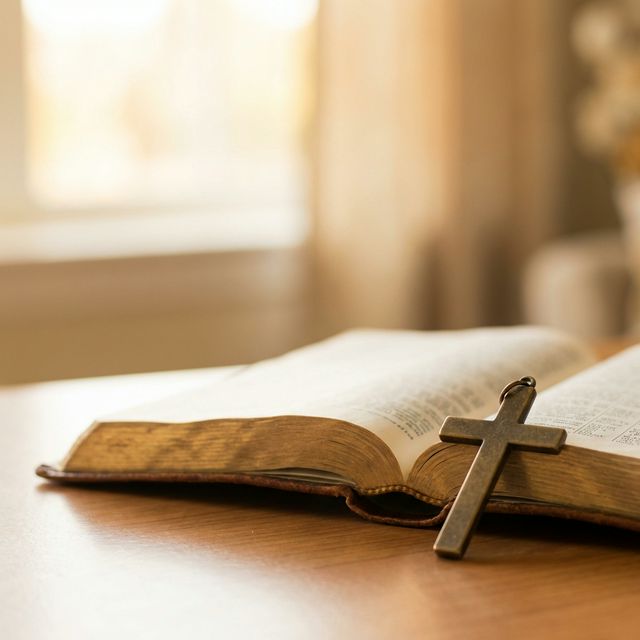
Get a physical Bible. Leave it open on your kitchen table or nightstand. An open book invites you to read; a closed book acts as a barrier.
The "Don't Break the Chain" Calendar
Print out a single-page calendar and put a big red X on every day you read.
Visual progress is addictive. You'll want to read just to keep the streak of X's going. It sounds childish, but it works.
A "New Year Christian" Journal
Don't write essays. Write one sentence.
- "I noticed Jesus was angry here."
- "This verse confused me."
- "I need patience today."
Keep it messy and short.
Handling the "Missed Day" Guilt
You'll miss a day. It's inevitable.
When you miss a day in your new year bible reading challenge, you have two choices:
- Try to read two days' worth of content tomorrow.
- Skip the missed day and just read today's portion.
Choose option two.
The first option leads to burnout, while the second keeps the habit alive. God knows what's in the chapter you skipped. He isn't mad. Just jump back in where the schedule says to be today.
Consistency beats intensity. A sloppy habit that lasts 10 years is better than a perfect habit that lasts 10 days.