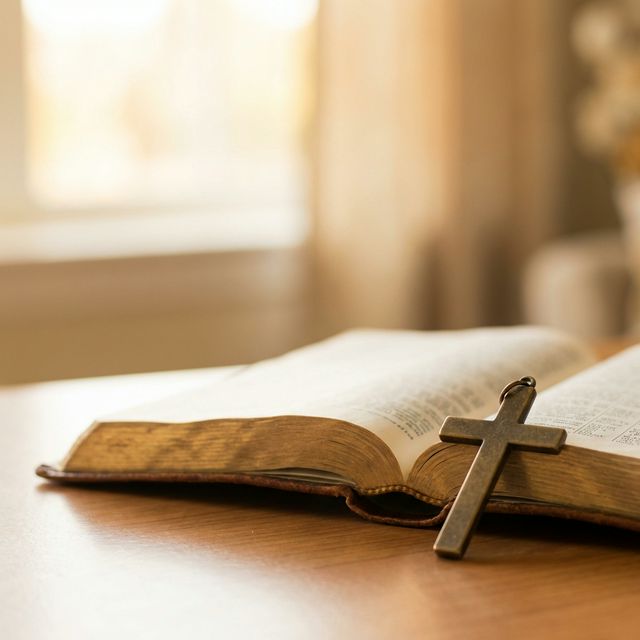

The best way to figure out how to start a bible study is to stop overthinking and just open the book. You don't need a theology degree or a fancy office to hear from God. You just need a quiet corner and a willing heart. Frankly, most people make this way too hard.
Bible reading is exploding right now. In 2025, weekly Bible reading among adults in the U.S. jumped to 42 percent. That's a massive 12 point increase from the lows we saw in 2024. People are hungry for truth in a world that feels upside down. If you feel that pull to start your own daily bible study for women, you're part of a huge movement of people returning to the Word.
How to Start a Bible Study and Make It Stick
Most people fail because they try to do too much at once. They decide on January 1st that they'll read the entire Bible in a year. Statistics show that only about 13 to 20 percent of people who start a cover to cover plan actually finish it. That's a high failure rate. Instead of aiming for quantity, aim for quality.
If you want to know how to start a bible study that actually changes your life, you have to treat it like a conversation, not a chore. You're meeting with the Creator of the universe. He has things to tell you.
Step 1: Pick Your Starting Point
Don't just flip the Bible open to a random page. That's like trying to watch a movie by jumping to a random scene in the middle. You'll get confused. For beginners, I always recommend starting in the New Testament.
The Gospel of John is the perfect place to begin. It tells the story of Jesus from a very personal perspective. If you want something more practical, the Book of James is like a punch in the gut (in a good way). It gives you straight talk on how to live out your faith.
Once you pick a book, stay there. Read one chapter or even just ten verses a day. According to a report from Religion News Service, younger generations are driving a massive comeback in Scripture engagement because they're looking for identity and purpose. You find that identity when you sit with one book long enough for it to get into your soul.
Step 2: Set Your Intention and Space
You need a "war room" or at least a "peace corner." This is a physical spot where your brain knows it's time to focus. It could be your kitchen table before the kids wake up or a certain chair in your living room.
Starting a bible study routine requires a trigger. Maybe it's the smell of your morning coffee or the sound of your house being quiet for five minutes. Put your Bible, your notebook, and your favorite pen in that spot. If you have to go hunting for your supplies every morning, you'll probably give up before you start.
Be honest about your schedule. If you're not a morning person, don't force a 5:00 AM study time. You'll just end up sleeping through it. Pick a time when you're alert. For some women, that's during a lunch break or right after the kids go to bed. The time matters less than the consistency.
Step 3: Use the Right Tools
In 2026, we have more resources than any generation in history. The YouVersion app hit over one billion installs recently. That's a billion people with the Word in their pockets. Apps are great for reading on the go or listening to the Bible while you drive.
But there's something powerful about paper and ink. When you use a physical Bible, you can see where things are located. You can underline, circle words, and write in the margins. It becomes a record of your journey with God.
I recommend learning more about the best bible translations for beginners before you buy a new one. The NLT or CSB are great for easy reading. If you want to go further into the original meanings, the ESV or NASB are solid choices.
Step 4: The Power of Prayer and Journaling
Don't start your study without talking to God first. It doesn't have to be a long, formal prayer. Just say, "God, open my eyes to see what You want me to see today." That simple shift in focus turns an academic exercise into a spiritual encounter.
Journaling is your secret weapon for keeping what you learn. When you write things down, you process them differently. Use simple prompts to get started:
- What does this passage say about God’s character?
- What does this passage say about people?
- Is there a command to follow or a promise to claim?
- How can I apply this to my life today?
If you feel stuck, try following the SOAP bible study method which stands for Scripture, Observation, Application, and Prayer. It's a foolproof way to make sure you're not just skimming the text.
Step 5: Build Bible Study Habits for Women
Consistency beats intensity every time. It's better to study for ten minutes every day than for two hours once a month. To make this a habit, you have to get through the "boring" phase. There will be days when the Bible feels dry. There will be days when you don't feel anything.
Read anyway.
Faith is a decision, not a feeling. Experts note that 2026 has seen a surge in Bible reading resolutions because people are looking for a firm foundation in a shaky world. If you miss a day, don't beat yourself up. Just pick it back up the next day. You're not "behind" because there is no race.
Step 6: Find an Accountability Partner
Doing this alone is hard. We were made for community. Find one other woman who wants to grow and text her every day when you finish your study. You don't even have to meet in person. Just a simple "Done!" text can keep you motivated.
If you can join a small group, do it. Hearing how other people see a verse can open your eyes to things you never noticed. It also gives you a place to ask the "dumb" questions. There are no dumb questions when it comes to the Bible.
Step 7: Apply What You Read
A Bible study without application is just gathering information. James 1:22 tells us to be doers of the word and not hearers only. Every time you finish your quiet time with God, ask yourself: "What is one thing I will do differently today because of what I read?"
Maybe you need to forgive someone. Maybe you need to be more patient with your kids. Maybe you need to stop worrying about your finances. Whatever it is, take that one step. That's how real change happens.
Comparing Bible Study Methods for 2026
| Method | Best For | Time Required | Difficulty |
|---|---|---|---|
| SOAP Method | Beginners wanting structure | 15-20 mins | Low |
| Word Study | Intense study on certain topics | 30+ mins | Medium |
| Lectio Divina | Meditative, slow reading | 15 mins | Low |
| Verse Mapping | Visual learners and researchers | 45 mins | High |
| Chapter Summary | Getting the "Big Picture" | 20 mins | Medium |
Common Mistakes Beginners Make
One major mistake is trying to start with the "hard" books. Avoid Leviticus, Numbers, or Revelation when you're just starting out. Those books are important, but they can be confusing without a lot of context. Stick to the stories of Jesus or the letters of Paul first.
Another mistake is using too many commentaries. Commentaries are great, but they're other people's thoughts on God's Word. You want to hear from God Himself first. Read the text three or four times before you look at what a scholar has to say about it. Trust that the Holy Spirit can teach you.
Don't ignore the context. Each book was written to a certain group of people for a certain reason. Knowing that Philippians was written by a man in prison makes the theme of "joy" much more powerful. Spend five minutes reading the introduction to the book in your study Bible to get the background.
Lastly, don't treat your Bible like a magic 8-ball. Don't just flip to a verse and expect it to be a direct answer to your exact problem without reading the verses around it. This is how people take verses out of context and get discouraged.
How to Study the Bible at Home Effectively
You don't need a lot of money to do this well. If you have a computer or a smartphone, you have access to incredible resources. Logos Bible Software has a free version that is amazing for word studies. Blue Letter Bible is another great site that lets you look up the original Greek and Hebrew words without needing to know the languages.
If you're a visual person, try using highlighters. Assign a color to different themes. For example:
- Blue: Promises of God
- Green: Commands to follow
- Red: Words of Jesus
- Yellow: Verses about identity
This makes your Bible look like a beautiful mess, but it helps you find things later. It also forces you to pay closer attention to what you're reading. You can start learning how to build bible study routine that sticks by simply committing to a certain color-coding system for one week.
The Mental Shift You Need
Stop thinking of Bible study as a task to check off your to-do list. If it's just another item between "buy milk" and "do laundry," you'll eventually drop it. Think of it as your lifeline.
In 2026, the world is louder than ever. Social media, news, and work stress are constantly screaming for your attention. Bible study is the only place where you can turn down the volume of the world and turn up the volume of God. It's where you find the peace that the world cannot give you.
If you feel like you're failing at it, you're probably doing better than you think. The fact that you even want to start is a sign that God is working in you. Be patient with yourself. Some days will feel like a mountaintop experience. Other days will feel like you're just reading words on a page. Both days are valuable.
Why Bible Reading is Surging in 2025-2026
We are seeing a massive shift in how people view faith. For a long time, the narrative was that Christianity was dying. But the data shows the opposite. Larger churches are growing, and Gen Z is leading the way in Scripture engagement.
People are tired of shallow answers. They're tired of "self-help" that doesn't actually help. They want something ancient, something proven, and something true. That's why bible study habits for women are becoming a central part of many households again. Women are realizing that if they want their families to be strong, they have to be rooted in the Word themselves.
Finding Your Rhythm
Your rhythm will change based on your season of life. A mom with a newborn will have a different study rhythm than a retired grandmother. That's okay. God meets you where you are.
If you only have five minutes, give Him those five minutes. Read one verse and meditate on it all day. That's better than reading nothing at all. If you have an hour, use it to go deep. Use your resources, write in your journal, and pray through the scriptures.
If you need more help getting organized, you might find it useful to check out this guide on bible study for women beginners for more clear tips. Or, if you want to see what other women are finding helpful, look into these easy bible studies for women that focus on exact life stages and challenges.
Final Thoughts on Starting Your Journey
You're ready. You have the steps. You have the tools. Now, you just have to do it. Don't wait for Monday. Don't wait for the "perfect" time. The perfect time is right now.
Open your Bible to John 1. Read the first five verses. Talk to God about what they mean. Congratulations, you just started your Bible study. Keep going tomorrow. And the day after that. Before you know it, you'll wonder how you ever lived without this daily time in the Word.
For more inspiration, you can see these bible study tips for women that cover everything from staying focused to dealing with distractions. If you're struggling with your sense of self, a bible study on identity for women can be a total game-changer. And if life feels overwhelming right now, consider starting a bible study on anxiety for women to find the rest your soul needs.