
The short answer
Today's daily Bible verse is below in the Berean Standard Bible and the King James Version, with a plain explanation of where it sits in Scripture. A new verse appears each day at midnight Eastern time. Read it in both translations, read the setting, notice where the wording differs, and take one phrase with you.
- One verse a day, read in its setting and side by side in two translations.
- What the BSB, WEB and KJV are, and why comparing them helps you read closely.
- Simple methods to read one verse well, memorize it and share it with care.
Today's daily Bible verse
The verse is shown in the Berean Standard Bible and the King James Version. Read both, then the explanation of where it comes from. A short question and prayer follow.
Early in the morning, while it was still dark, Jesus got up and went out to a solitary place to pray.
And in the morning, rising up a great while before day, he went out, and departed into a solitary place, and there prayed.
What it means
Long before sunrise, Jesus went off alone to a quiet place to pray.
Reflect
When could you make space for quiet prayer this week?
Pray
Father, draw me into quiet time with you, as Jesus made time with you. Amen.
How to read a single verse well
One verse can carry a lot when you give it ten unhurried minutes. This method works on any daily verse.
Read it slowly, twice
Read once for the sense and once for the words. On the second pass, mark the word that carries the most weight.
Read the paragraph around it
Open your Bible to the chapter and read from the paragraph break before the verse to the one after. Most misreadings of a single verse disappear here.
Name the kind of writing
A line of poetry, a proverb, a promise to Israel, a command in a letter and a sentence in a story each work differently. A proverb describes how life usually goes, for example, and a psalm gives words to pray.
Compare two or three translations
Read the verse in the BSB, the WEB and the KJV. Where they agree, the meaning is clear. Where they differ, look closer: that is often a word with more than one shade of meaning.
Follow one cross-reference
Most Bibles list related verses in the margin. Read one. Scripture often explains itself, and the link shows how a theme runs through the whole Bible.
Ask what it shows about God
Start with who God is and what he has done in the passage. What it asks of you follows from that.
Respond in one sentence
Write a sentence of thanks, a request or a step for today. Keep it small enough to do.
Reading a daily verse in its setting
Most verses in the Bible are part of an argument, a story, a poem or a letter. Reading the sentences before and after shows who is speaking, who they are speaking to and what they are answering.
Three questions help with any daily verse: Who is speaking? What was happening? What does this show about God? Answer those before asking what it means for your day.
- Who is speaking. A psalmist praying, a prophet warning, Jesus teaching or an apostle writing to a church.
- What was happening. Exile, a celebration, a fear, a letter written from prison.
- What it shows about God. Start with who he is. The application follows from that.
Three translations to read side by side
The BSB, the WEB and the KJV are all in the public domain, so they can be quoted exactly as written. Each was made in a different way, which is why reading them together helps.
| Translation | What it is | How it reads | Worth knowing |
|---|---|---|---|
| Berean Standard Bible (BSB) | A modern English translation from the Hebrew, Aramaic and Greek, first published as the Berean Study Bible in 2016, revised and placed in the public domain in 2023 | Clear, current English that stays close to the original wording | A good main Bible for daily reading and study |
| World English Bible (WEB) | A volunteer update of the American Standard Version of 1901 into modern English, public domain from the start | Plain modern English, a little more literal in places | Uses the name Yahweh in the Old Testament where most English Bibles print LORD |
| King James Version (KJV) | The English translation first printed in 1611, with the spelling most editions use today dating from 1769 | Early Modern English: thee, thou and older word order | Some words have changed meaning since 1611, so a modern translation beside it helps |
Why reading a verse in more than one translation helps
Every translation makes choices. Hebrew and Greek words often carry more than one English word can hold, and translators decide whether to keep the original word order or to make the sentence read naturally. Seeing two or three versions together shows you where those choices were made.
When the translations agree, you can read with confidence. When they differ, you have found a place to slow down. In 1 Corinthians 13 the KJV says charity where the BSB and WEB say love, because the English word charity has narrowed since 1611. In John 15 the KJV says abide where the BSB says remain, and both are fair renderings of one Greek word.
Comparing translations will not settle every question, and scholars from different traditions sometimes prefer different readings. It does keep you from building too much on a single English word, and it makes a familiar verse feel new.
- Read your main translation first. Let it be the version you think in.
- Then read the others. Note any word that changes.
- Ask why. Is it older English, a word with two meanings, or a different word order?
- Check the footnotes. Many Bibles explain a hard word in a note at the bottom of the page.
Daily Bible verses from the past week
The last seven days, each with a line of setting.
- Nov 24 · Proverbs 31:8-9
Open your mouth for those with no voice, for the cause of all the dispossessed. Open your mouth, judge righteously, and defend the cause of the poor and needy.
King Lemuel's mother tells her son to speak up for those who have no voice and defend the poor and needy.
- Nov 23 · 2 Kings 4:2
“How can I help you?” asked Elisha. “Tell me, what do you have in the house?” She answered, “Your servant has nothing in the house but a jar of oil.”
A widow facing debt asks Elisha for help. He asks what she has in the house, and she says only a jar of oil. That small jar becomes the start of God's provision.
- Nov 22 · 2 Thessalonians 3:13
But as for you, brothers, do not grow weary in well-doing.
Paul tells the Thessalonian believers not to grow weary in doing good. Rest is allowed along the way.
- Nov 21 · Matthew 28:19-20
Therefore go and make disciples of all nations, baptizing them in the name of the Father, and of the Son, and of the Holy Spirit, and teaching them to obey all that I have commanded you. And surely I am with you always, even to the end of the age.”
Jesus sends his followers to make disciples of every nation and promises his presence with them always, until the very end.
- Nov 20 · Proverbs 27:9
Oil and incense bring joy to the heart, and the counsel of a friend is sweetness to the soul.
Proverbs compares the earnest counsel of a friend to the joy that perfume and incense bring.
- Nov 19 · 1 Kings 10:1
Now when the queen of Sheba heard about the fame of Solomon concerning the name of the LORD, she came to test him with difficult questions.
The queen of Sheba hears of Solomon's fame and travels a long way to put difficult questions to him.
- Nov 18 · 1 Thessalonians 5:16-18
Rejoice at all times. Pray without ceasing. Give thanks in every circumstance, for this is God’s will for you in Christ Jesus.
Paul gives three short instructions: rejoice always, pray without ceasing and give thanks in all circumstances. This is thanks within hard times, never thanks for the harm itself.
How to memorize a daily verse
A new verse every day is too many to memorize. Choose one verse a week from the daily verses and give it seven days.
Choose the one that stayed with you
At the end of the week, pick the verse you kept thinking about. Short verses are easier to start with.
Write it on a card
Copy the verse and its reference by hand. Put the card where you will see it: by the sink, on the dashboard, in your phone case.
Learn it in phrases
Break the verse into three or four short phrases. Learn the first, then add the next, saying the reference at the start and the end each time.
Use the first-letter method
Write only the first letter of each word. Read the verse from the letters until you no longer need the full text.
Say it out loud
Saying a verse aloud, or writing it from memory, fixes it better than reading it silently.
Review on a widening schedule
Repeat it on day 1, 2, 4 and 7, then after two weeks and a month. Spaced review keeps a verse for years.
Pray it
Turn the verse into a prayer during the week. A verse you have prayed is easier to remember when you need it.
Sharing a daily verse with care
A verse sent at the right moment can mean a great deal. A few habits keep it kind and true to the text.
Accurate
Send the reference
Include the book, chapter and verse, and the translation. It lets her read the whole passage for herself.
Context
Add one line of setting
A sentence on who wrote it and why keeps a verse from sounding like a slogan.
Personal
Say why you thought of her
A short personal line ("this made me think of your week") turns a verse into a message from a friend.
Kind
Go gently with grief
Someone in pain may need presence before a verse. Ask first, or pair the verse with an offer of help.
Lasting
Write it by hand
A verse copied onto a card or a sticky note lasts longer than a message that scrolls away.
Fuller
Share the passage too
For a longer conversation, send the whole paragraph. The verse makes more sense with its neighbors.
Make a daily Bible verse stick
Pick one time
Link it to something that already happens: the first coffee, the school run, the commute. A daily habit needs a fixed place in the day.
Keep it small
The first goal is to show up. A verse and one sentence of thought counts.
Write one line
A line in a notebook or journal turns reading into remembering. A month from now it becomes a record of what God has been showing you.
Follow one verse into its chapter each week
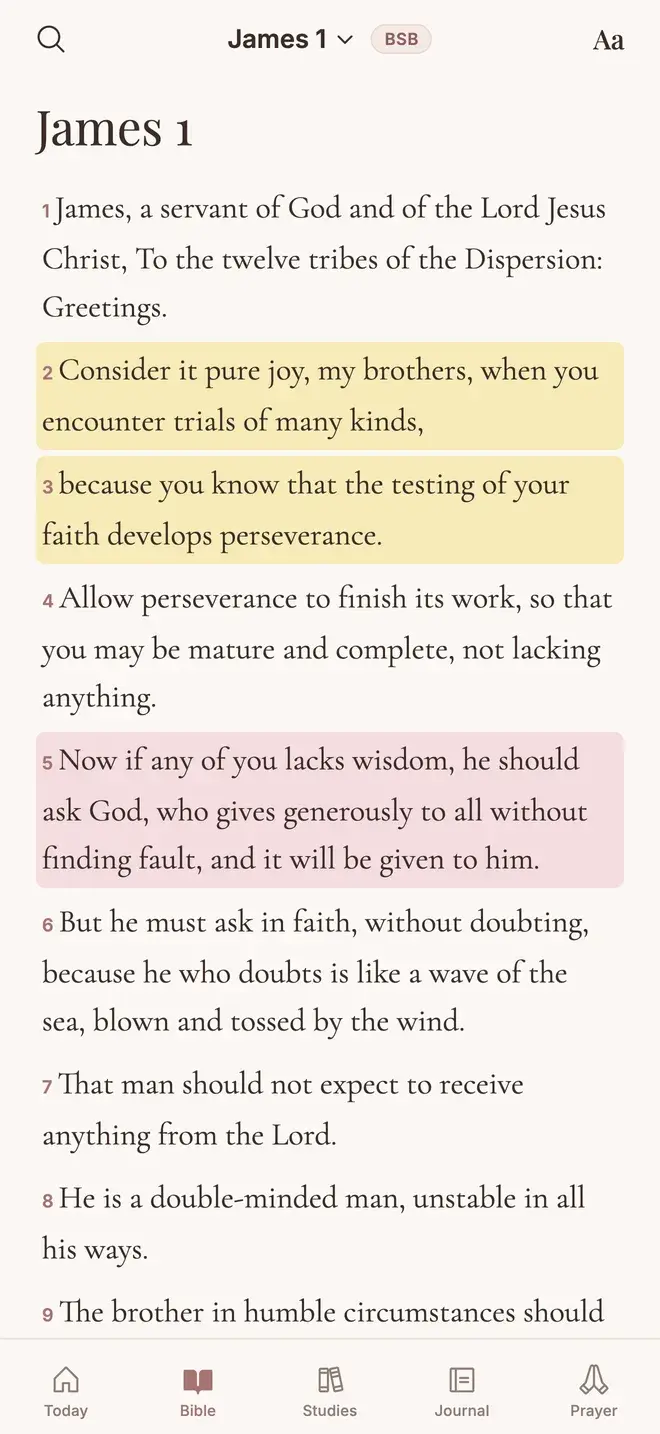
Choose the verse that stayed with you and read the whole chapter. That is where a verse of the day grows into a Bible study.
Return after a missed day
Missing a day is ordinary. Pick up at today's verse without catching up.
A daily verse or a guided study?
They do different jobs, and many women use both.
| Daily verse | Guided study | |
|---|---|---|
| Time | 2 to 5 minutes | 5, 10 or 20 minutes |
| Best for | Starting the day with Scripture | Understanding a passage or book |
| Shape | One verse, context, question, prayer | One passage a day over seven days |
| Where it fits | Morning, a lunch break, a pause | A set time you protect |
In the app
A daily Bible verse that leads somewhere
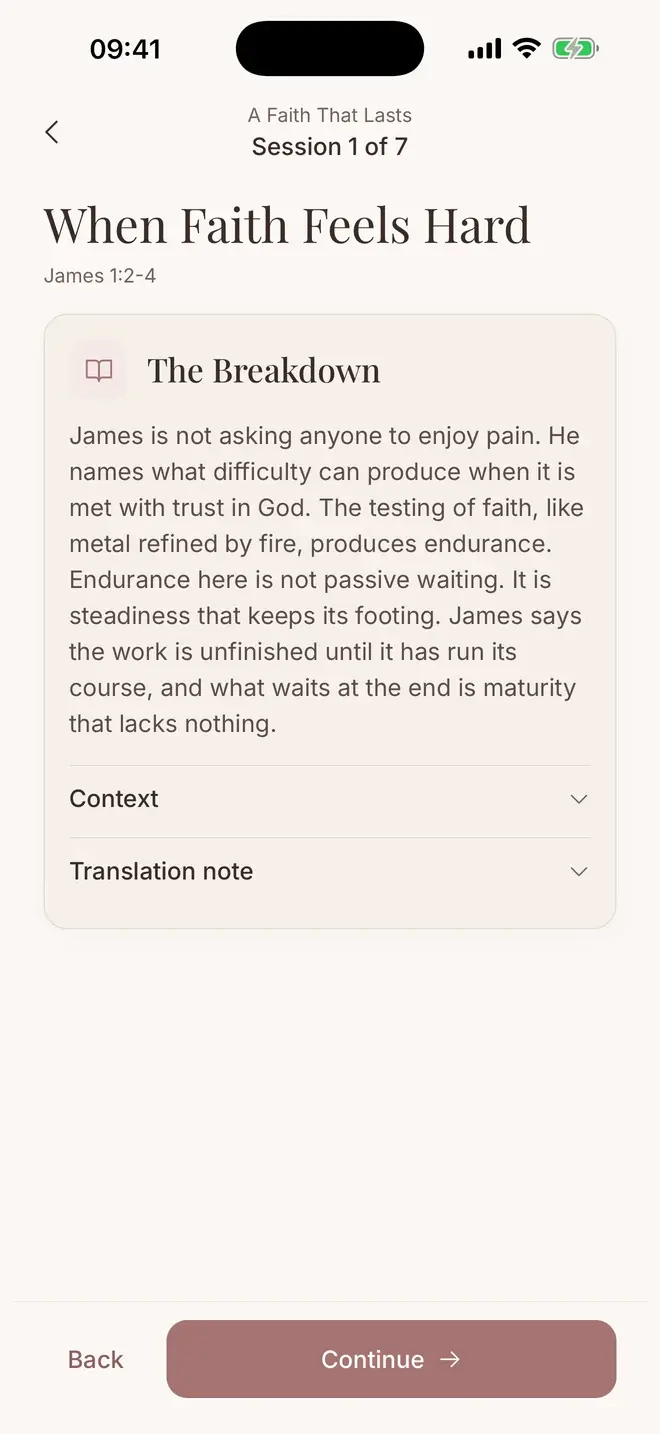
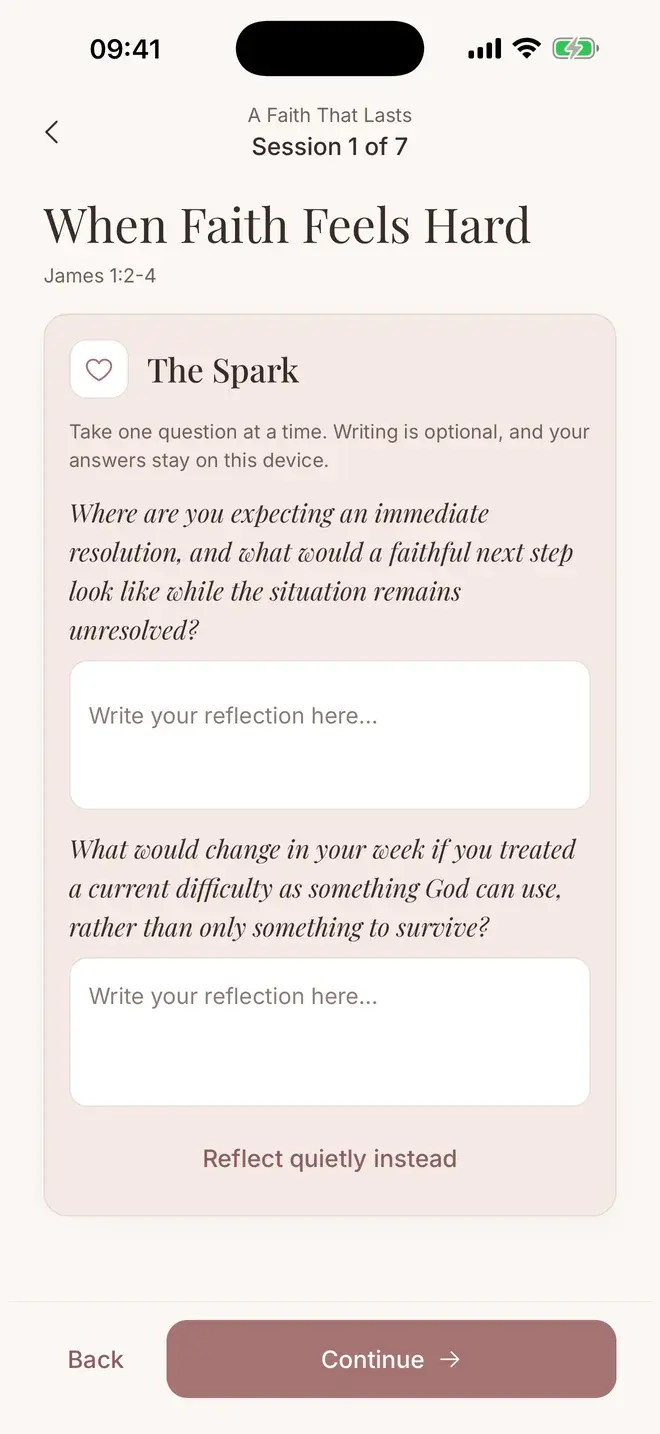
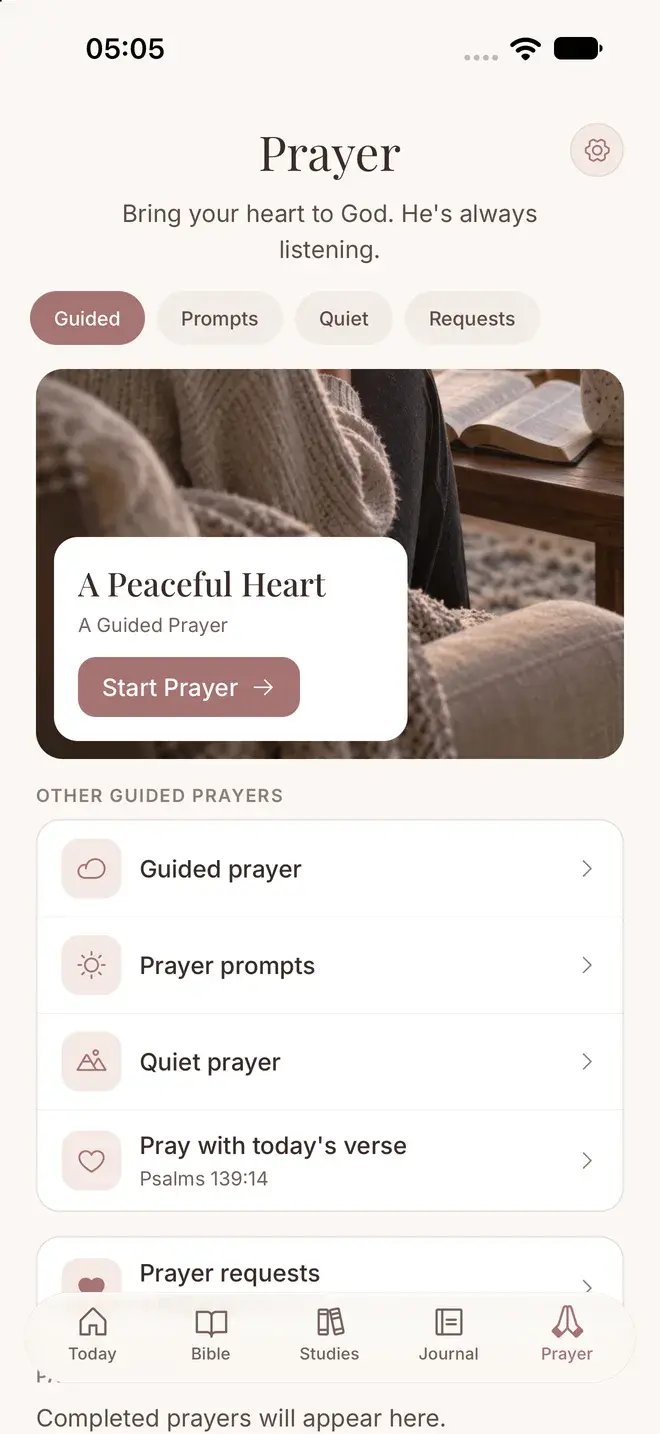
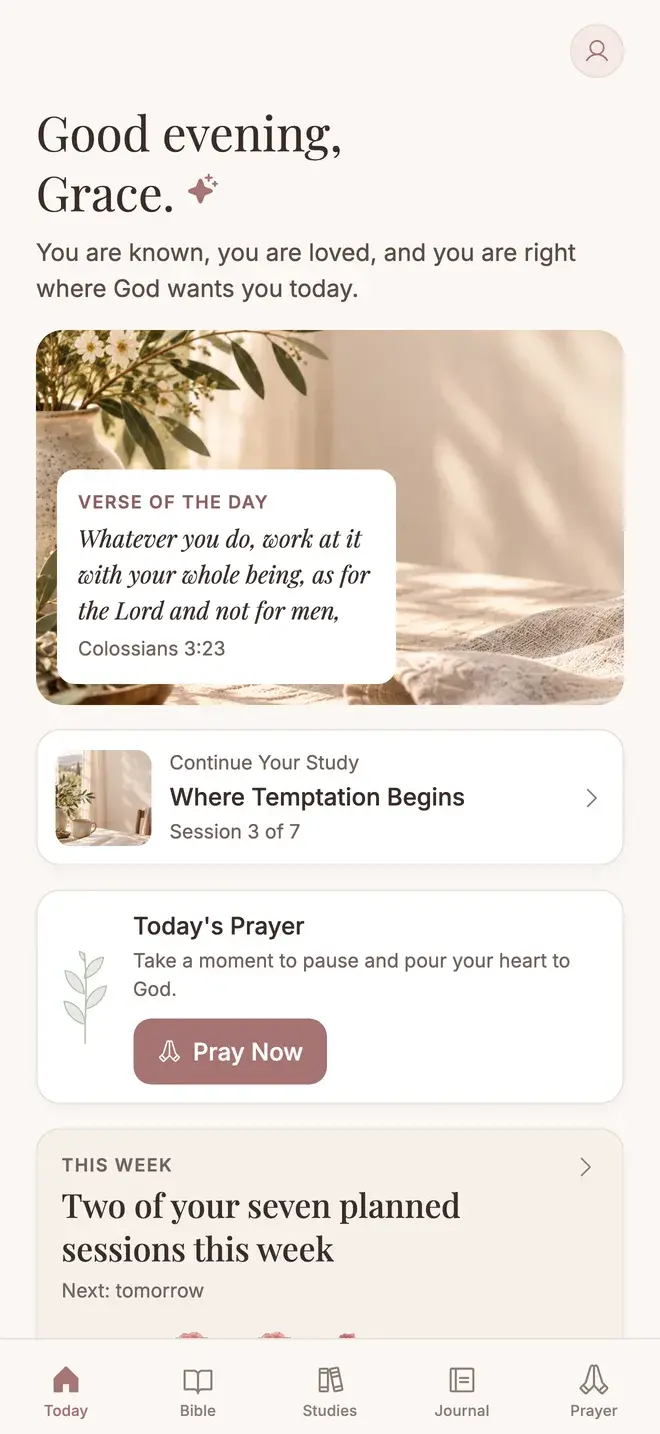
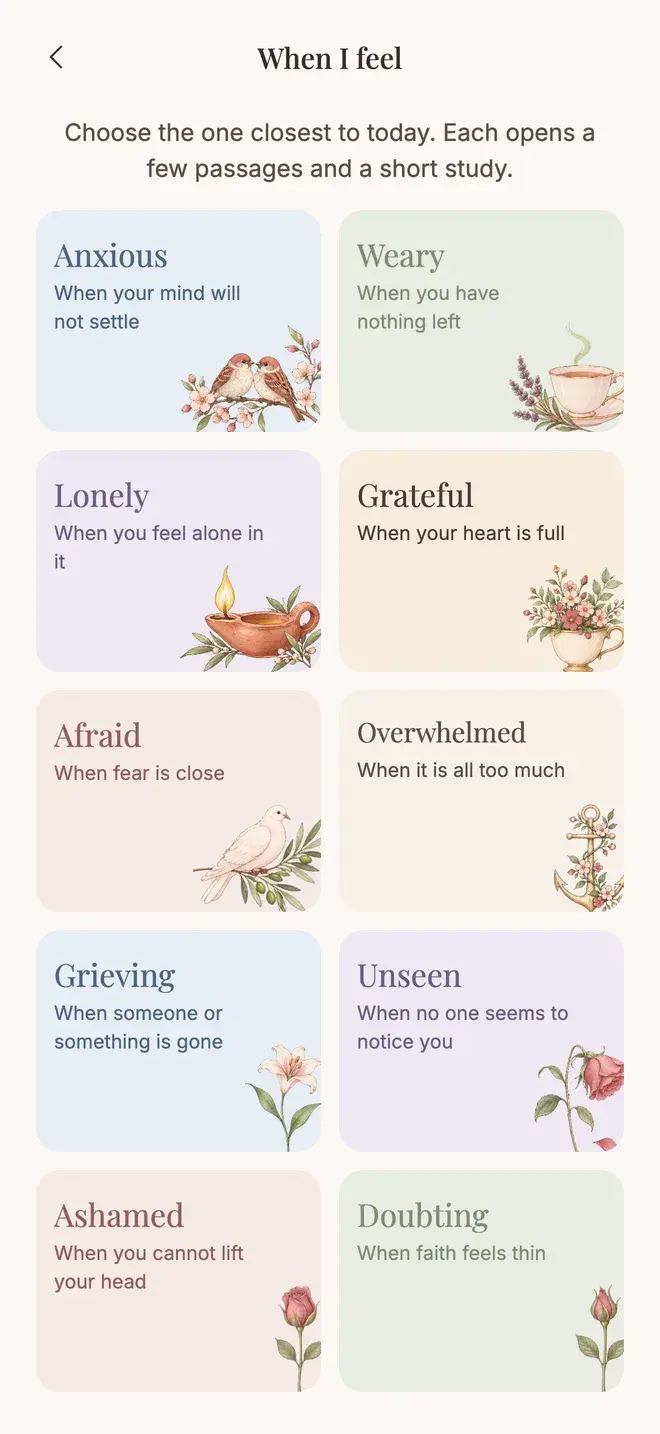
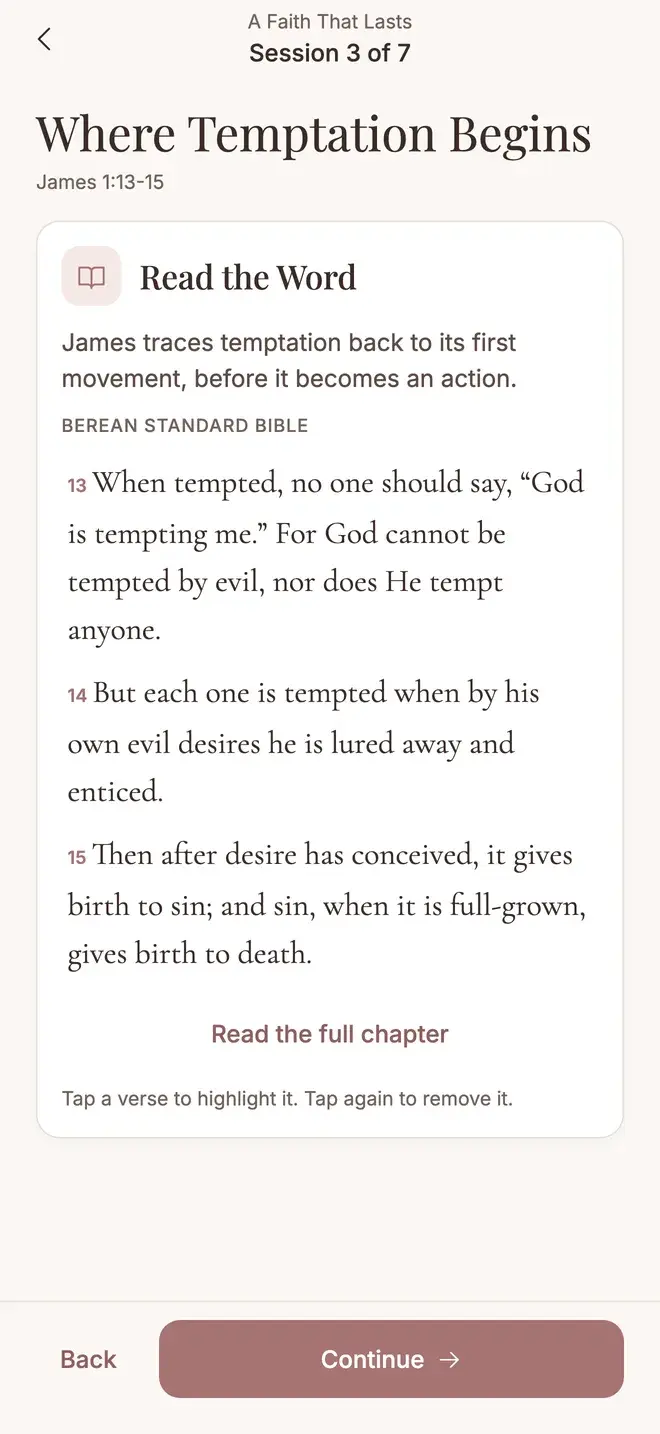
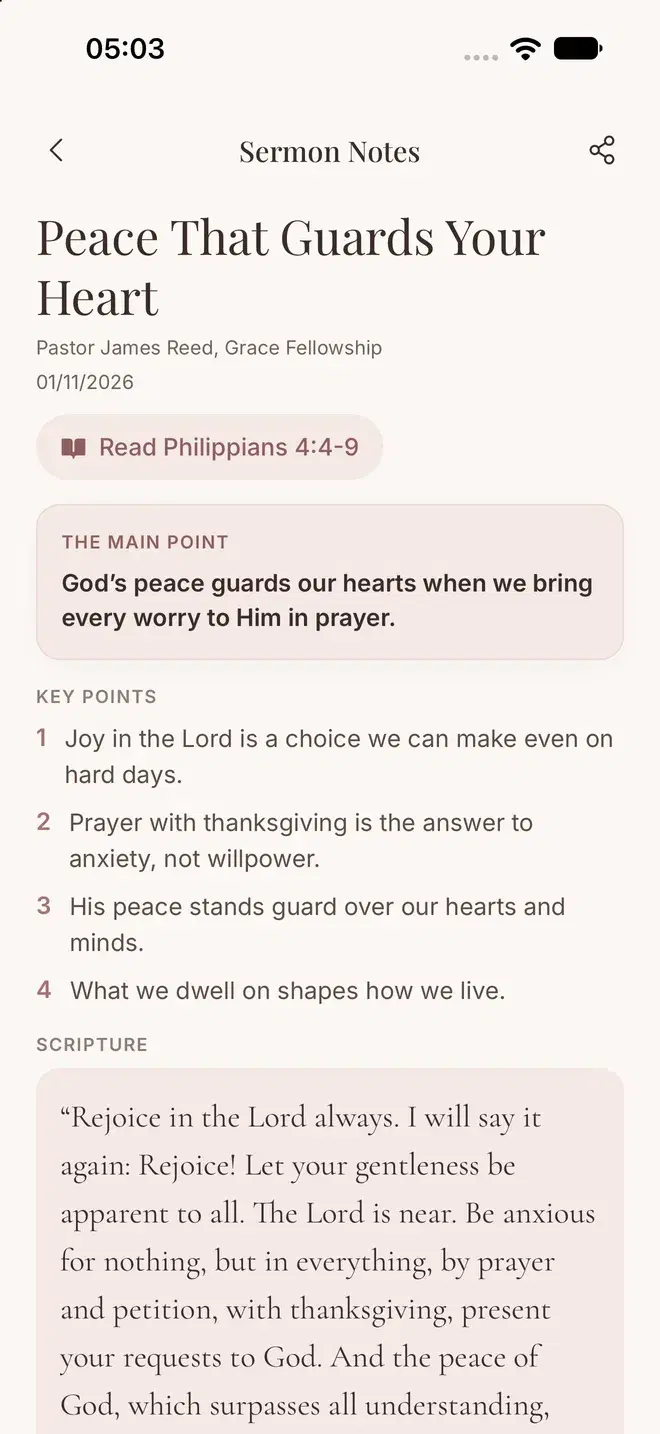
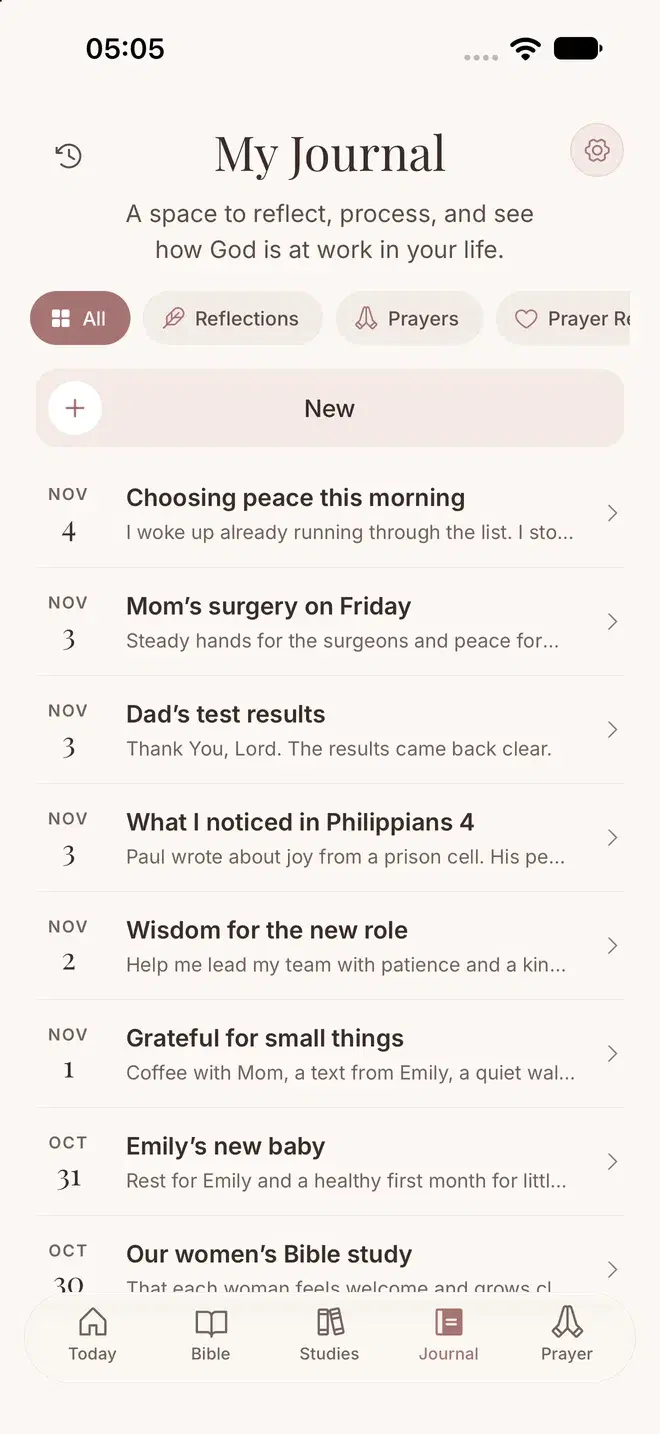
In the Bible Studies for Women app, the Today tab opens on the verse of the day with its setting, a question and a prayer. When a verse hooks you, a tap takes you into the passage around it, or into a seven-day study on the same theme.
Choose a daily, twice-weekly or weekly rhythm and the days that suit you, then keep your thoughts in a private journal that stays on your phone.
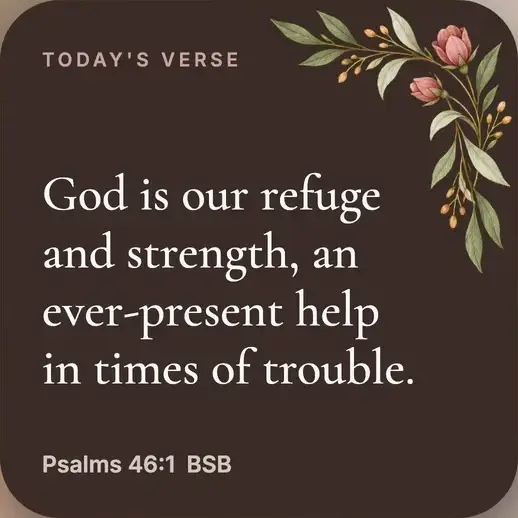
- Today's verse on the Today tab and as a home screen widget.
- More than 400 daily verses, each with setting, question and prayer.
- BSB, WEB and KJV, all 66 books, readable offline.
- Seven-day studies at 5, 10 or 20 minutes a day.