
The short answer
To study the Bible, choose a short passage, read it twice, notice what it says, work out what it meant to the first readers, then decide how to respond and pray. Observe, interpret, apply. This guide shows each step with questions you can use today, plus thirteen guided studies if you want the work laid out.
- A six-step method that works on any passage.
- Questions to ask, and common mistakes to avoid.
- Thirteen ready guided studies, and where to go if you want a printed guide.
Free printable Bible study guide (PDF)
Everything on this page and much more, in one guide you can print, put in a binder or read on a tablet. Free, with no email needed.
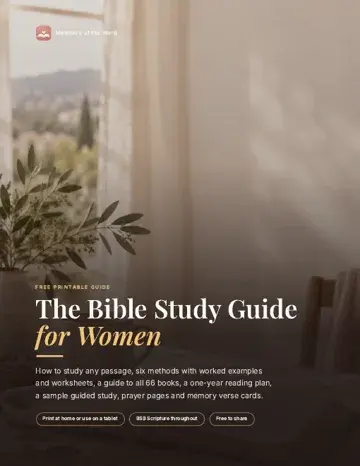
Free PDF · 50 pages
The Bible Study Guide for Women
Fifty pages: the six steps of studying a passage, SOAP and inductive study with worked examples and worksheets, character, topical, word and book studies, a one-page guide to all 66 books, a sample Philippians session, the one-year reading plan, ACTS prayer pages, memory verse cards and a small group guide.
Download free PDFNo sign-up. US Letter, prints on A4. 3.6 MB.
How to study the Bible in six steps
This method follows the classic pattern of observation, interpretation and application, with prayer at both ends.
Pray first
Ask God to help you understand. A sentence is enough: "Open my eyes to see what is in your Word."
Choose a short passage
A paragraph, a psalm or a short chapter. Starting small makes it possible to see details. Begin with a Gospel, Psalms, Philippians or James.
Observe: what does it say?
Read it twice. Write down who, what, where, when and what repeats. Underline repeated words and the words that connect ideas (for, so, but, therefore).
Interpret: what did it mean?
Ask who wrote it, to whom, and why. What was happening? Read the verses before and after, and compare a second translation.
Apply: what do I do with it?
Ask what the passage shows about God, then what it shows about you. Choose one small, real response for today.
Pray it back
Turn what you have seen into thanks, confession or a request. Write it down.
Questions to ask of any passage
Keep these in a notebook or your journal. You will not use all of them every time.
Observation
- Who is speaking, and to whom?
- What words or ideas repeat?
- What is the main contrast or turn?
- What does it say about God?
Interpretation
- What is the setting?
- What type of writing is this: story, poem, letter, law?
- Where else in the Bible is this theme?
- Do Christians read this passage in different ways?
Application
- What do I need to believe differently?
- What do I need to do or stop doing?
- Who should I tell or pray for?
- What is one step for today?
Prayer
- What can I thank God for here?
- What do I need to confess?
- What am I asking God to do?
Common mistakes and how to avoid them
These are habits that trip many readers, and they are easy to correct.
- Starting with application. Ask what it says and meant before asking what it means for you.
- Reading a verse alone. Read the paragraph, and often the chapter.
- Reading yourself into every story. Ask first what the passage shows about God. You are not always David.
- Treating all passages the same way. Poetry, law, narrative and letters each work differently.
- Studying without a plan. Pick a book or theme and a number of days before you begin.
- Skipping hard texts. Suffering and justice passages need care. A study should never tell you to stay in danger or accept abuse.
Tools that help
| Tool | What it does | When to use it |
|---|---|---|
| A second translation | Shows where wording differs | When a verse seems unclear |
| A study Bible | Gives notes on setting and meaning | When you want background |
| A Bible dictionary or commentary | Explains words, places and history | After you have read the passage yourself |
| A journal | Captures observations and prayers | Every session |
| A guided study | Lays out the passage and steps | When you want a clear path |
Bible study guides by book
Where to start, how long each book takes and what to watch for. Short books first.
Beginner, 4 chapters
Ruth
Four chapters about loss, loyalty and God's quiet care through ordinary people. A complete story in four sessions. The app's Ruth: The Whole Book study covers it in seven days.
Beginner, 5 chapters
James
Five practical chapters on trials, wisdom, speech and faith that acts. One chapter a day works well. The app's A Faith That Lasts study is built on it.
Beginner, 4 chapters
Philippians
Four chapters of joy and peace, written from prison. Read it in one sitting first, then a paragraph a day. The app's Peace in the Chaos study walks through it.
Beginner, 16 chapters
Mark
The shortest Gospel, fast and vivid. Sixteen chapters, about three weeks at a chapter most days. A clear first meeting with Jesus.
Beginner, 4 chapters
Jonah
Four chapters about a reluctant prophet and a God whose mercy reaches further than Jonah wanted. Good for a group: the ending leaves a question open.
Any level, 150 psalms
Psalms
One hundred fifty prayers and songs. Study them one at a time, not in order: start with Psalms 1, 23, 46, 103 and 139. The psalms of lament give words for hard seasons.
Read moreGrowing, 21 chapters
John
Twenty-one chapters, written so readers would believe (John 20:31). Slower and deeper than Mark, with long conversations and the I am sayings.
Growing, 10 chapters
Esther
Ten chapters of courage and timing in a foreign empire. God is never named in the book, which makes it a rich study on providence.
Growing, 5 chapters
1 Peter
Five chapters on hope and suffering for scattered believers. Read carefully: its words to wives and servants need their historical setting, and they never require anyone to stay in danger.
Growing, 6 chapters
Ephesians
Six chapters: three on what God has done in Christ, three on how to live in response. A good book for learning to trace an argument.
Longer, 50 chapters
Genesis
Fifty chapters from creation to Joseph. Study it in sections: creation and fall (1 to 11), Abraham and Sarah, Jacob, Joseph. Christians read the early chapters in different ways.
Deeper, 16 chapters
Romans
Sixteen dense chapters on sin, grace, faith and life together. Best after a shorter letter. Take a paragraph a day and keep a study note beside you.
How to choose a Bible study guide
A study guide is a tool to help you read the Bible. The best ones make you a more confident reader, so that over time you need them less. Before you commit, read the first session and check it against these points.
- It keeps the Bible open. You read the full passage, and questions send you back to the text.
- It explains the setting. Author, audience, date and the kind of writing, in plain words.
- It asks real questions. A mix of observation, meaning and application, with room for honest answers.
- It fits your time. Check the session length and the number of weeks before you start.
- It names its tradition. Every guide comes from somewhere. A good one says where Christians differ instead of presenting one view as the only one.
- It handles hard texts with care. Passages on suffering, submission or violence get context, and nothing in the guide tells a reader to stay in danger or accept abuse.
- It suits your level. Beginners do well with a short book and short sessions. Experienced readers may want word studies or a longer book.
How to use a study guide on your own
Set the days and the time
Decide how many sessions a week, and when. Write it in your calendar like any other appointment.
Read the passage before the guide
Read the Scripture twice and jot down what you notice. Then turn to the guide's notes and questions.
Write your answers
Short written answers keep you honest and give you something to look back on.
Mark your questions
Keep a list of what you do not understand. Bring it to a pastor, a friend or a good commentary at the end of the week.
Finish with prayer
Turn one thing you learned into a prayer before you close the book.
How to use a study guide in a group: a 60-minute outline
Everyone reads the session at home during the week. The meeting is for discussing it together.
- 0 to 10 minutes
- Welcome and a short opening prayer. One easy question for everyone, such as what stood out this week.
- 10 to 20 minutes
- Read the passage aloud together, one person or a few verses each.
- 20 to 45 minutes
- Work through three or four of the guide's questions. Choose the best ones in advance and skip the rest. Ask what the passage says before what it means for each person.
- 45 to 55 minutes
- Application: each person names one response for the week, if they want to.
- 55 to 60 minutes
- Pray for each other. Keep prayer requests in the group unless someone asks for them to be shared.
- Leader tip
- Let silences run. If one person dominates, ask to hear from someone who has not spoken yet. When the group disagrees on a reading, note that Christians differ and move on kindly.
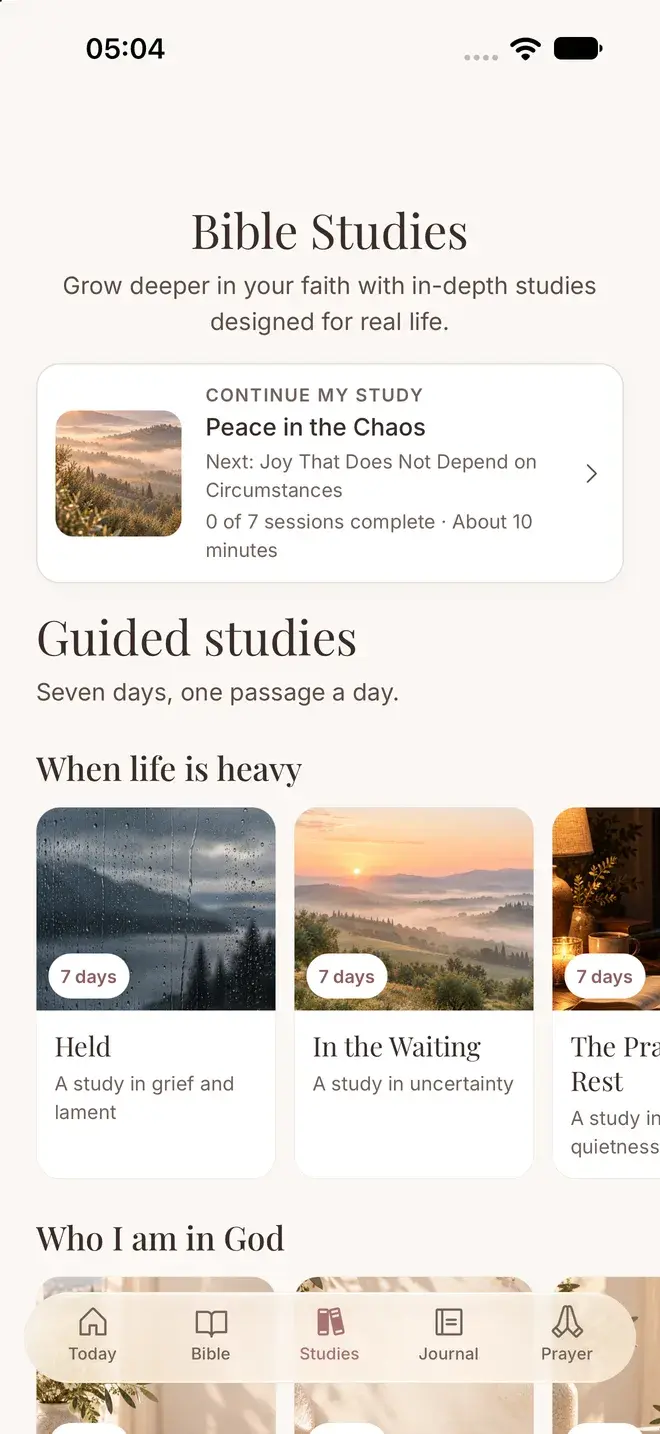
Thirteen guided studies to start with
Each is seven sessions and follows the method above. A good first choice is a beginner study.
7 days · growing
Boundaries
A study in limits, honesty and rest
Protecting what matters, saying a plain no, and carrying only what is actually yours. Seven sessions across Proverbs, Matthew, Nehemiah, Mark, Luke, Galatians and Exodus, with a shorter or deeper route through each one.
7 days · growing
Courage to Speak
A study in courage and leadership
Courage grounded in who God is rather than in a guarantee, and truth spoken with care. Seven sessions across Joshua, Esther, Psalms, 2 Timothy, Acts, Ephesians and Daniel, with a shorter or deeper route through each one.
7 days · beginner
Friendship
A study in friendship and loyalty
Friendship as something done rather than only felt, including the honesty, patience and cost it involves. Seven sessions across Proverbs, Ecclesiastes, Ruth, John, Ephesians and 1 Samuel, with a shorter or deeper route through each one.
7 days · growing
Held
A study in grief and lament
Honest prayer, patient presence and a settled hope, for the seasons nobody chooses. Seven sessions across Psalms, Job, John, 2 Corinthians, Ecclesiastes, Lamentations and Revelation, with a shorter or deeper route through each one.
7 days · beginner
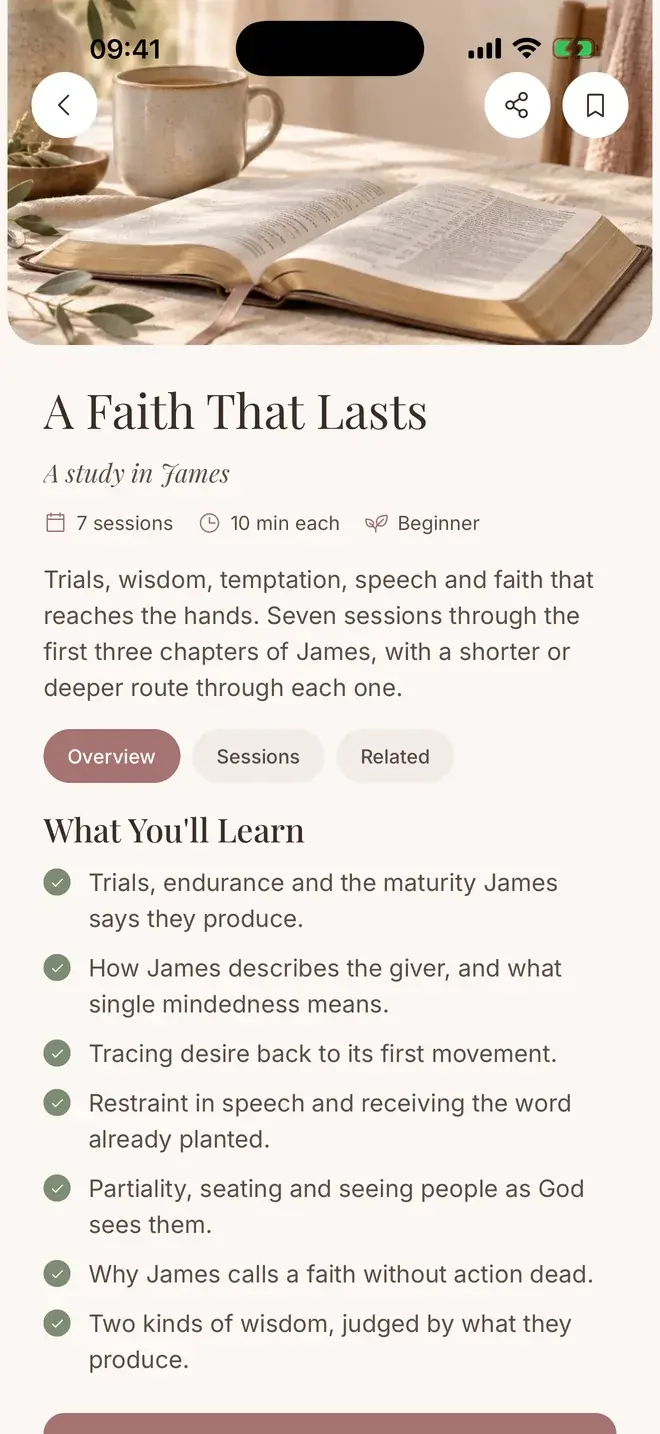
A Faith That Lasts
A study in James
Trials, wisdom, temptation, speech and faith that reaches the hands. Seven sessions through the first three chapters of James, with a shorter or deeper route through each one.
7 days · growing
A Household of Grace
A study in parenting
Formation over time rather than control in the moment, held alongside the reality that parents influence their children without determining them. Seven sessions across Psalms, Deuteronomy, Proverbs, Ephesians, 2 Timothy and 1 Samuel, with a shorter or deeper route through each one.
7 days · growing
Peace in the Chaos
A study in Philippians
Joy, prayer, attention and contentment, written by someone in prison to a community under pressure. Seven sessions through Philippians, with a shorter or deeper route through each one.
7 days · beginner
The Practice of Rest
A study in rest and quietness
Rest as part of the design rather than a reward, and quietness as strength rather than passivity. Seven sessions across Genesis, Exodus, Psalms, Mark, Matthew, Hebrews and Isaiah, with a shorter or deeper route through each one.
7 days · beginner
Rooted
A study in identity
Where identity comes from, and what it is for. Seven sessions across Psalms, Ephesians, 1 Peter, Romans, Galatians, Colossians and Matthew, with a shorter or deeper route through each one.
7 days · beginner
Ruth: The Whole Book
A whole-book study in four chapters
Loss, loyalty, provision and a genealogy nobody saw coming. Seven sessions through the whole of Ruth, with a shorter or deeper route through each one.
7 days · beginner
Giving Thanks
A study in gratitude
Gratitude in full seasons and empty ones: remembering the giver, naming what God has done, coming back to say thank you, and giving thanks inside hard circumstances. Seven sessions across Deuteronomy, Psalms, Luke, Daniel, Habakkuk, 1 Thessalonians and Colossians, with a shorter or deeper route through each one.
7 days · beginner
In the Waiting
A study in uncertainty
Trust when the road is not visible, and waiting that is active rather than passive. Seven sessions across John, Proverbs, Isaiah, Hebrews, Matthew and Psalms, with a shorter or deeper route through each one.
7 days · growing
Everyday Work
A study in work and calling
Work as a calling rather than a punishment, held alongside the reality of unfair pay, comparison and exhaustion. Seven sessions across Genesis, Colossians, 1 Corinthians, Ecclesiastes, James, Micah and Psalms, with a shorter or deeper route through each one.
Where to go next
In the app
A Bible study guide that does the setup for you
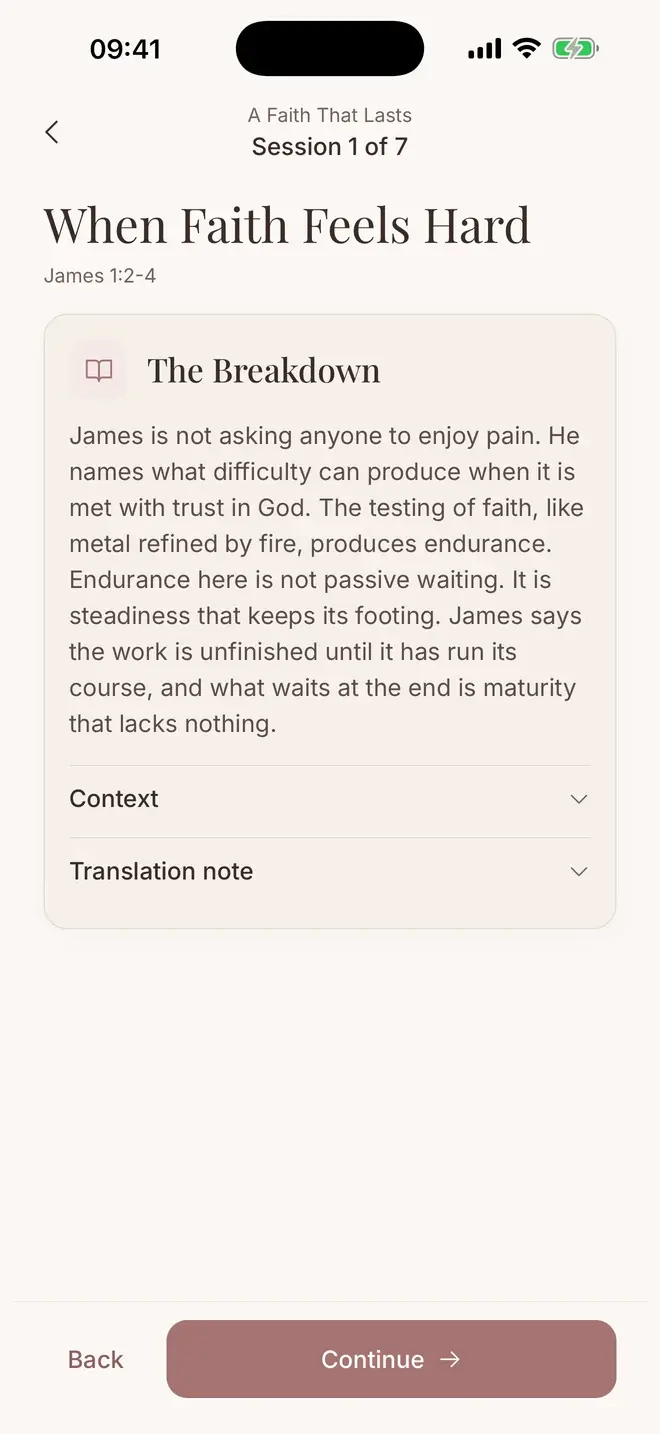
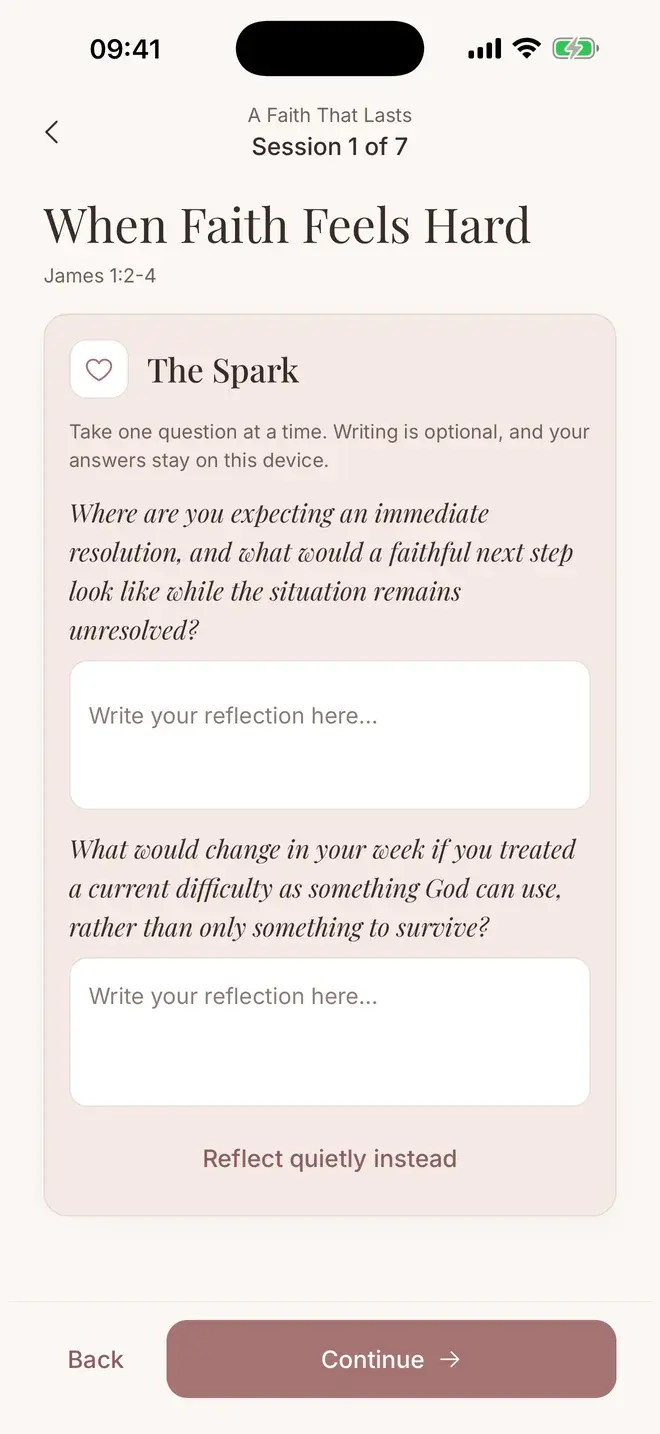
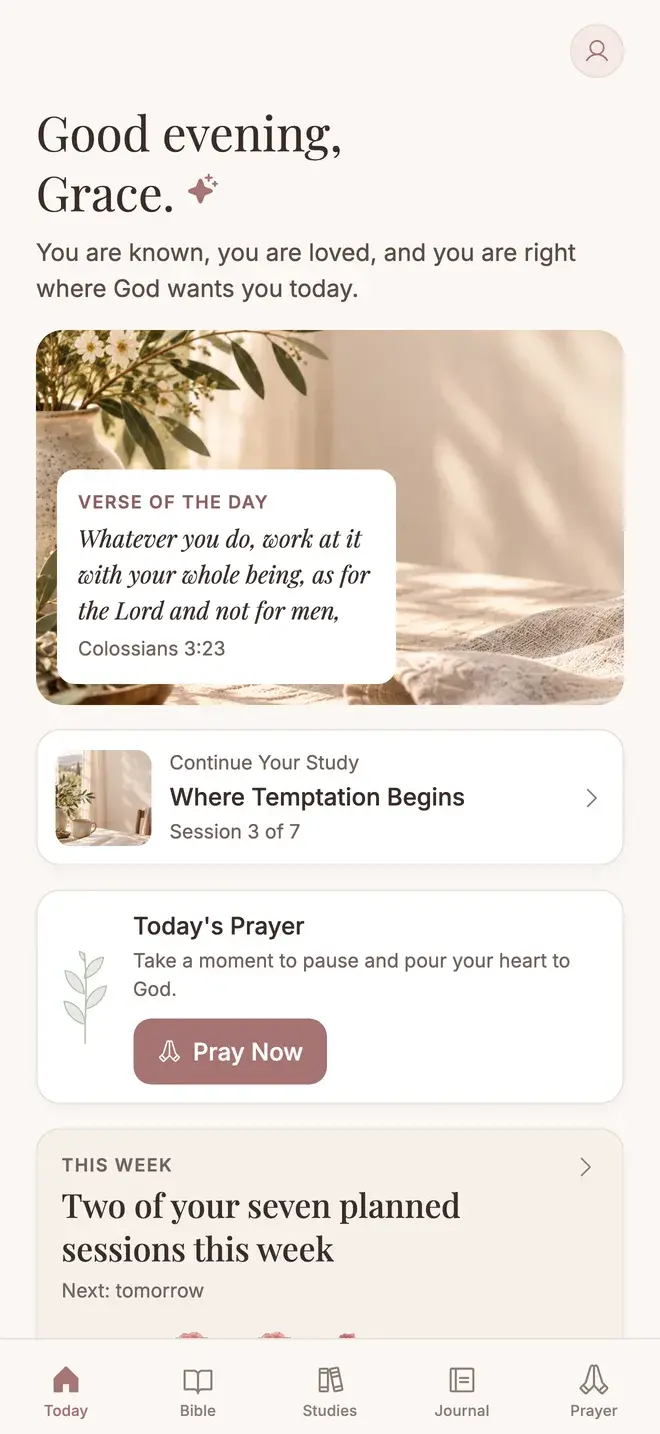
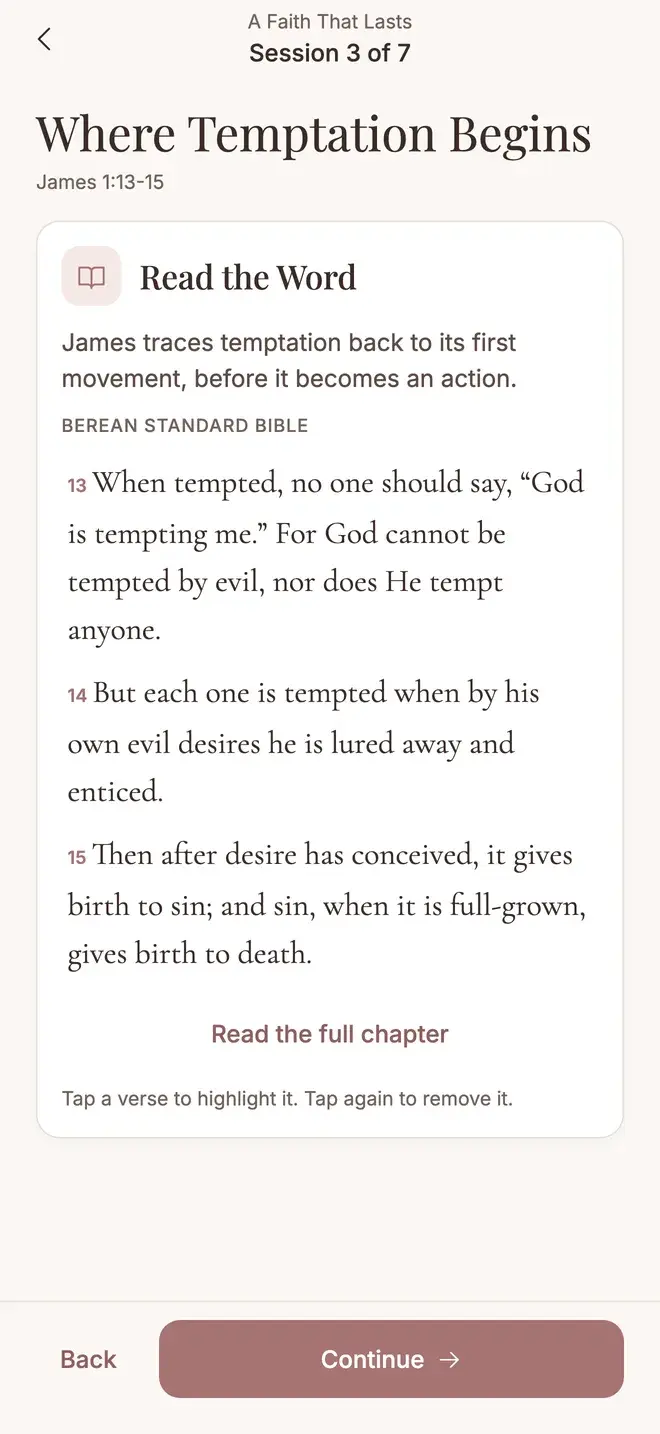
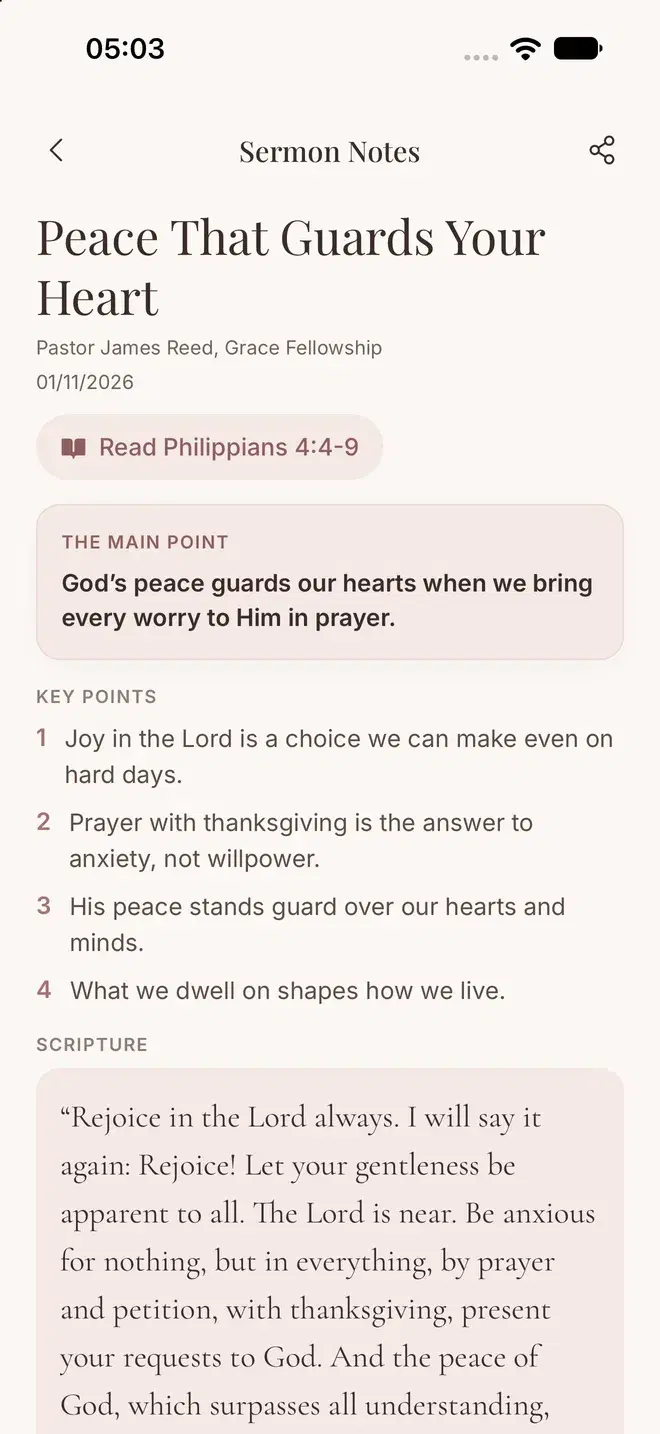
The Bible Studies for Women app turns this method into a guided study. Each session reads the passage with you, points to what to look at closely, explains the setting, asks one question and ends in prayer, at the length you choose.
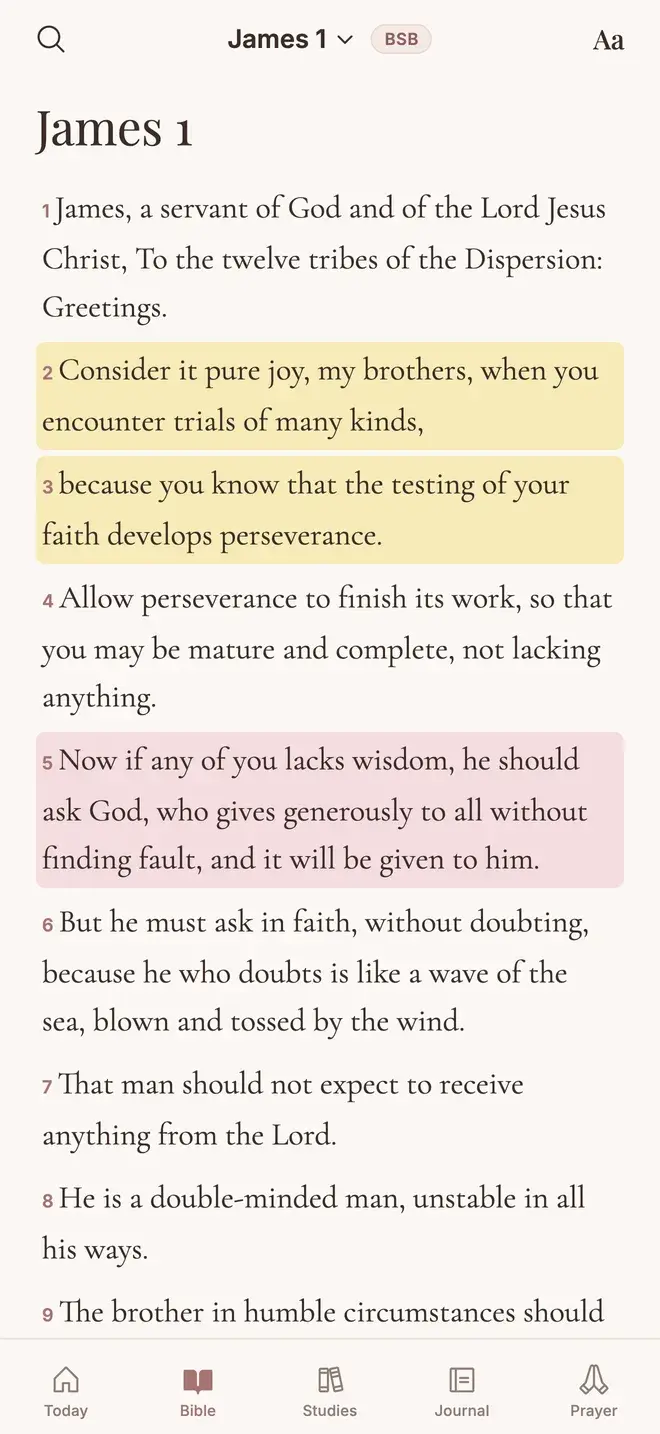
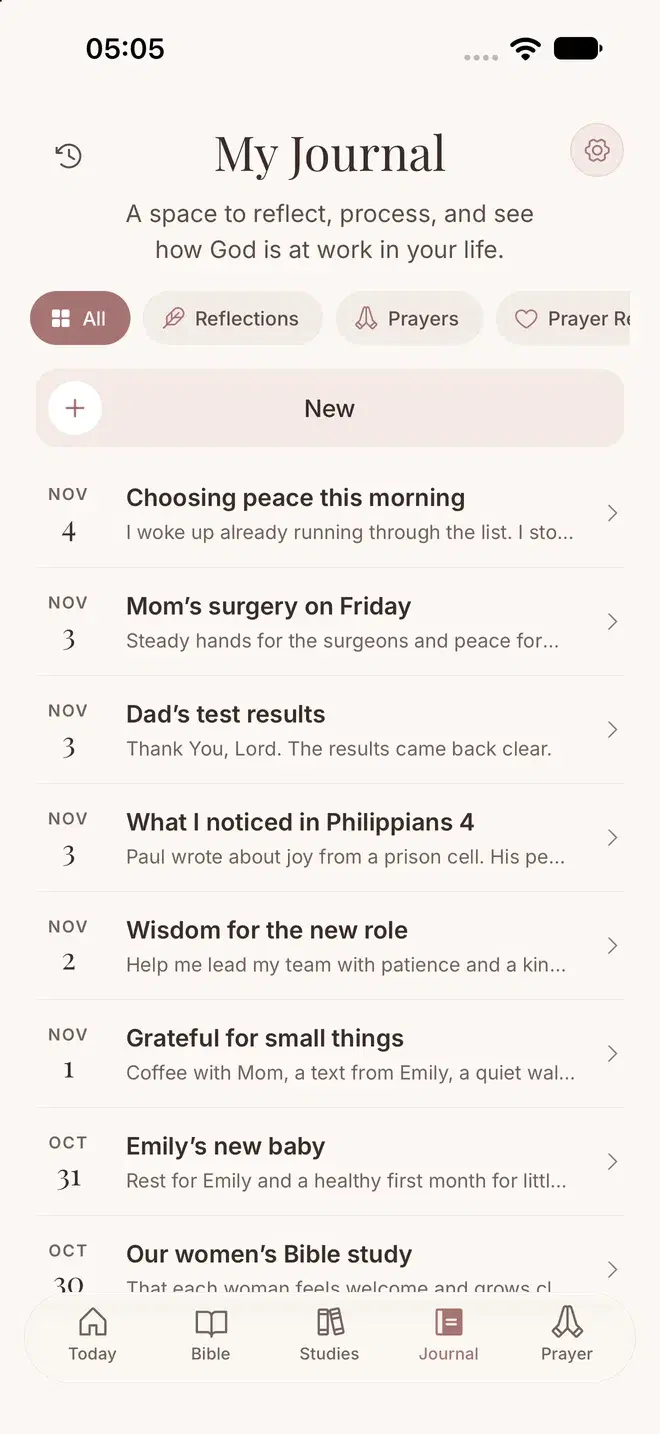
It also keeps the Bible, your highlights and your notes in the same place, so what you notice is saved.
- Six stages every session: Read, Look closely, The Breakdown, The Spark, Pray it through, Walk It Out.
- Sessions at about 5, 10 or 20 minutes on the same passage.
- Highlights, notes and bookmarks tied to the verse, in any of three translations.
- Study notes that mark where Christians read a passage differently.