
Chapter 1
Reading is a start. Study is how it stays.
Why study at all
Most women who open a Bible have a good reason. A hard season, a sermon that resonated, a friend who seemed to have something steady, a quiet feeling that there must be more. Then they read a chapter, feel a little lost in the second half, and close it. The next day the chapter is gone from memory and the book goes back on the shelf.
Reading and studying are different activities, and many people never get taught the second one. Reading moves your eyes across the page. Studying slows down enough to ask what the text says, what it meant to its first readers, what it shows about God, and what it asks of you on an ordinary Tuesday. The difference is small in minutes and large in result.
This guide is a full course in that second activity. It covers how the Bible is built, a method you can use on any passage, how to read each kind of writing, how to journal and pray what you find, and how to keep a rhythm when life is loud. It is written for women at every stage: the beginner who has never finished a book of the Bible, and the woman who has been in church for thirty years and wants her time in the Word to feel alive again.
What you will need
Very little. A Bible in a translation you can follow, a pen, something to write on, and ten quiet minutes. If you want a place to begin before you read further, the Bible study guide page holds the short version of this course, and a free printable edition is a download away.
What study gives you that reading alone does not
- Memory. Writing things down tends to help you remember them. One observation and one question, written out, will often still be with you a week later.
- Accuracy. Context protects you from pulling a verse out of its setting and making it say something it never said.
- Depth. The same chapter reads differently the fifth time, because you have started to notice patterns, repeated words and echoes of other books.
- Direction. A passage you have worked through gives you something to do, pray or change, not just something to admire.
- Confidence. Many women who study begin to feel that the Bible belongs to them and not only to experts, because it does.
You do not need to become a scholar. The tools in this guide are the same ones pastors and teachers use, stripped to what an ordinary woman can do in a short window of the day. Start small and the habit does the rest.

Chapter 2
Set up a place, a time and a plan you can keep
Before you open the book
The women who keep a study habit have usually made it easy to start. Three decisions do most of the work: where, when and how long.
Choose a spot that is already waiting for you
Pick one chair, one corner of the table or one end of the sofa, and keep your Bible, pen and notebook there. When everything is in one place, starting costs nothing. If you share a small home, a tray or a basket you carry to the table works just as well. A quiet time is built from small cues like these: the same cup, the same lamp, the same few minutes.
Anchor it to something you already do
Habits stick when they follow something that already happens every day. After the first coffee. When the kids are on the bus. Before you check your phone at night. Choose the anchor, then say it as a sentence: "After I pour my coffee, I open my Bible." Vague plans like "sometime in the morning" lose to a busy day nearly every time.
Decide how long, and be honest
Short, frequent sessions are easier to keep than one long one. If you are new, begin with five. A study session of about five minutes can be a short passage, one observation and one sentence of prayer. About ten minutes lets you add a question and a note. About twenty gives you room for context, a cross reference and a proper journal entry. Pick the size that fits this week, not the size you wish you had.
| Time you have | What fits |
|---|---|
| About 5 minutes | Read one short passage twice, note one word that stands out, pray one sentence. |
| About 10 minutes | Read the passage, answer three questions, write one line of application, pray. |
| About 20 minutes | Read the passage and its context, follow one cross reference, journal, pray it back. |
Pick a plan so you never wonder what to read
Deciding what to read each morning is where many good intentions die. A plan removes the decision. A Bible study plan walks through a theme or a book over several weeks. A Bible reading plan moves through whole books on a calendar. If you want structure and explanation together, a guided Bible study gives you the passage, the context and the questions in one place each day.
You can mix them. Many women use a reading plan for breadth and one slow study for depth, such as one Gospel read carefully while the reading plan carries them through the rest. If you would rather work on paper, the free one-year plan and the 90-day plan print as simple checklists with a box for each day.
Try it · Try it tonight
- 1.Choose your spot and put your Bible and a pen there.
- 2.Write the sentence: "After I ____, I open my Bible."
- 3.Pick your size, 5, 10 or 20 minutes, and the plan that fits it.
- 4.Put a single reminder on your phone for tomorrow only. One day is easier to keep than a year.

Chapter 3
The Bible is a library, and each shelf reads differently
How the Bible is built
The Bible is a collection of sixty-six books written over roughly fifteen hundred years, by many authors, in three languages: Hebrew, a little Aramaic, and Greek. There are letters, laws, songs, stories, sermons, proverbs, genealogies and visions. Reading a psalm like a legal code, or a letter like a poem, is the quickest way to get confused. So the first skill in study is knowing what shelf you are standing at.
Two testaments
The Old Testament has thirty-nine books, written mostly in Hebrew. It tells the story of creation, the call of Abraham, the nation of Israel, its laws, its poets and its prophets. The New Testament has twenty-seven books, written in Greek. It begins with four accounts of the life of Jesus, continues with the story of the early church in Acts, then letters to churches and individuals, and ends with the book of Revelation. Catholic and Orthodox Bibles include additional books in their Old Testament, and their lists are not identical. The sixty-six-book canon used here is the one most Protestant churches follow.
Chapters and verses are later additions
The chapter divisions most Bibles use came in the thirteenth century and the verse numbers in the sixteenth. They are useful for finding your place, but the original writers did not use them. This matters in study, because a sentence can run across a chapter break, and a verse is only a piece of a thought. Always read a few lines before and after the verse you care about.
Choosing a translation
Translations sit on a spectrum. Word-for-word versions stay close to the structure of the original and can read stiffly. Thought-for-thought versions are smoother and interpret more as they go. Most good study uses one of each. The King James Version, from 1611, is beautiful and public domain, but its English is four hundred years old. The World English Bible and the Berean Standard Bible are modern, readable and also free to use and quote without a license. Whatever you pick, stay with it for a season so the wording becomes familiar, and compare a second version when a passage puzzles you.
Where women are in the story
Women are present from the first pages to the last. Deborah judged Israel, and her song is preserved in Judges 5. Ruth chose loyalty and became an ancestor of David. Hannah poured out her heart at the tabernacle. Esther risked her life for her people. In the Gospels, Mary Magdalene is among the first to see Jesus risen, and in John's Gospel she is the first. In the letters, Paul greets Phoebe as a servant of the church (some translations say deacon) and Priscilla as a fellow worker. A women-focused study can simply slow down and notice these women.
Try it · Try it with your own Bible
- 1.Open the contents page of your Bible and find the main groups: law, history, poetry, prophets, Gospels, Acts, letters and Revelation.
- 2.Choose one book from a section you have never read.
- 3.Read its first page and write one sentence about what kind of writing it is.

Chapter 4
The six-step method for any passage
The heart of the guide
Every strong study method comes down to the same moves, whatever it is called. Pay attention to what the text says, work out what it meant, then ask what it means for you. This guide uses six steps, in an order that keeps the first reading honest and the last step practical. The method is simple enough to run in five minutes and deep enough to carry a twenty-minute session. The Bible study guide PDF turns each step into a printable worksheet.
Step 1: Read it twice
Read the whole passage once without a pen, just to hear it. Read it again with a pen. Reading out loud, even quietly, slows you down and catches words your eyes skip. Aim for a passage of five to fifteen verses to start. A single verse is too little context, and a whole chapter is often too much at once.
Step 2: Observe
Ask what is actually on the page. Who is speaking and who is being spoken to? What happens, in what order? Which words repeat? Is there a contrast, a list, a command, a promise or a question? Write down five observations without explaining any of them yet. This is the step most people skip, and it is the one that stops you reading your own assumptions into the text.
- People: who is involved, and what does each one show?
- Places and times: where and when is this set?
- Words: what is repeated, emphasized or surprising?
- Connections: look for "because", "so that", "therefore" and "but", which show how a thought is built.
- Feeling: what is the mood, and does it change?
Step 3: Understand the setting
Now find the context. Who wrote this, to whom, and why? What happened just before it? What was life like for the first readers? A study Bible, a short book introduction or a trusted commentary can fill this in. Context turns "this sounds odd" into "oh, that is what he meant". It is also how you avoid the common mistake of reading a promise made to one person in one time as a guarantee for every situation.
Step 4: Interpret
Put it in one sentence: what was the author trying to say to the first readers? Interpretation means working out the plain meaning of the passage in its setting. Check your sentence against the surrounding chapters, and against the rest of Scripture, which Christians have long read as a united witness. If your reading clashes with a clear teaching elsewhere, go back to the observations.
Step 5: Apply
Only now ask what it means for you. Good application is specific and small: a person to call, a habit to change, a fear to name, a prayer to pray, a truth to repeat. A useful test is to finish this sentence: "Because this is true, today I will ____." Application should also be honest about the text. Some passages call for action, and others only call for trust, rest or thanks.
Step 6: Pray it back
Turn what you found into a few lines to God: thanks for what the passage showed about him, confession for what it exposed in you, a request for what you need. Study that ends in prayer stops being an exercise and becomes a conversation. If you keep a prayer journal, this is where the page gets used.
Example · The six steps on Psalm 23:1-3 (KJV)
- Read
- "The LORD is my shepherd; I shall not want. He maketh me to lie down in green pastures: he leadeth me beside the still waters. He restoreth my soul: he leadeth me in the paths of righteousness for his name's sake."
- Observe
- The speaker says "my", so this is personal. Verbs are all about care: lie down, leads, restores. The setting is green pasture and still water, not a hard road.
- Understand
- David was a shepherd before he was a king. A good shepherd finds water and rest for sheep who cannot do it themselves.
- Interpret
- God provides what his people need and leads them to rest.
- Apply
- Because this is true, today I will stop treating one worry as if it were mine alone to carry.
- Pray
- "Lord, you know what I am afraid of. Lead me to rest today."
If you want this laid out as a set of daily sessions, that is what a guided study does: it moves through the steps for you and gives you the context in plain words.

Chapter 5
How to read each kind of writing
Right tool, right book
The six steps work on every passage, but each kind of writing has habits that help. A proverb states a pattern, a narrative often describes without commanding, and a prophecy rarely works as a calendar. Knowing the genre lets you ask better questions.
Story: Genesis to Esther, the Gospels and Acts
Narrative shows more than it tells. Watch for the characters, the turning point and what happens to them, and resist the urge to make every character a role model. Many people in the stories do foolish or wrong things, and the text records it without applause. Ask what the story reveals about God. Then ask what it invites you to believe or do.
Law: the first five books
The laws were given to Israel as a nation in a specific time. Christians read them for what they reveal about God's holiness, justice and care for the vulnerable, and many of the principles carry forward even where the specific rules do not. Traditions differ on how the law applies today: some divide it into moral, civil and ceremonial parts, and others read it as one whole fulfilled in Christ. Genesis sits on two shelves, since it opens the five books of law and also begins the story. When you meet a law that seems strange, ask what problem it was solving and what it shows about God.
Poetry: Psalms, Song of Songs, Lamentations
Hebrew poetry rhymes ideas. A line is said, then said again in different words, or answered by its opposite. "The LORD is my light and my salvation; whom shall I fear?" The second line leans on the first. Read slowly, expect imagery, and let a psalm be honest. Roughly a third of the psalms are laments, and they give you language for grief, anger and waiting.
Wisdom: Proverbs, Job, Ecclesiastes
A proverb states a general pattern. "Train up a child in the way he should go" describes how life tends to work, and it leaves room for a child who chooses differently. Job and Ecclesiastes push back against simple formulas and are worth reading as honest conversations about suffering and meaning.
Prophets: Isaiah to Malachi
Prophets were mainly spokespeople for God. They called Israel back to faithfulness, warned of consequences and promised restoration. Read them with a timeline nearby. Ask who was being addressed, what they were doing wrong, and what hope is held out. Many prophetic promises carry meaning for the first hearers and for later fulfillment, and traditions differ on how. Many Christians see these promises fulfilled in Christ and the church, some expect a future restoration of Israel, and some hold both. Jewish readers read the prophets differently again, in light of their own tradition.
Letters: Romans to Jude
Letters are one side of a conversation. Reconstruct the situation: what problem in the church or the reader's life made the author write? Follow the argument paragraph by paragraph, and watch for the word "therefore", which marks the turn from teaching to practice.
Apocalyptic: Daniel and Revelation
These books use vivid symbols and numbers to show a hidden reality, usually to encourage people under pressure. Many readers start with the main message the first readers needed: God is on the throne, and evil does not win. Christians then differ on whether the imagery points to the first century, to history across the centuries, to the end of time, or to timeless patterns, so hold your reading of the details loosely.
Try it · Try it across three days
- 1.Read one psalm, one chapter of a Gospel and one chapter of a letter on three separate days.
- 2.For each, write the genre and the first question you asked.
- 3.Notice how the same six steps change shape with each one.
Chapter 6
Context, cross references and the words underneath
Going deeper without a seminary degree
Once the six steps feel familiar, three habits will take your study from good to rich. They are checking the context, following cross references and looking at the words the author actually chose. None of them needs special software. All of them reward patience.
Context: the verses on either side
Many misunderstood verses share one problem: they were lifted out of their paragraph. Jeremiah 29:11 is a favorite on graduation cards. Read it in place and you find a letter to people dragged into exile in Babylon. Just before it, God tells them to build houses, plant gardens and settle in, because the exile will last seventy years. God made this promise to the exiles, and it shows his character: he does not skip the hard years, and he keeps his word on the other side. You can read it as that without treating it as a guarantee for every situation.
Ask four questions whenever a verse feels like a slogan. Who is speaking? Who is being spoken to? What came just before? What comes just after? Two minutes with those answers will correct most errors before they settle in.
Cross references: let Scripture explain Scripture
Most Bibles print small references in the margin or beneath the text. They point to other passages that quote, echo or explain the one you are reading. Follow two or three. Psalm 119:105 says, "Thy word is a lamp unto my feet, and a light unto my path." Set it beside Proverbs 3:5-6, which speaks of trusting the LORD and having your paths directed, and one common reading is that God guides step by step more often than he lights the whole road at once.
A good rule is to let clear passages interpret unclear ones, never the other way round. When a verse puzzles you, look for a plainer passage on the same subject, and let that one set the frame.
Words: what the author chose
You do not need Hebrew or Greek to benefit from the original languages. A free Strong's concordance or interlinear Bible online will show the word behind the English one. Psalm 23:6 says goodness and mercy shall "follow" me. Many scholars note that the Hebrew verb can also mean pursue, and some readers hear in that God's goodness actively seeking her. Most English translations still say "follow", so treat the extra shade as a thought to weigh.
Use word studies sparingly. Pick one word in a passage, the one that repeats or puzzles you, and look it up. Check how else the Bible uses it. Be wary of any teaching that builds a whole doctrine on one Greek word.
If you want a verse to study each day with its setting already laid out, the verse of the day page gives one with context and a short reflection. And the scripture journal approach, copying a verse out by hand, forces the slow noticing that context study depends on.
Try it · Try it on a favorite verse
- 1.Choose a verse you love and have quoted for years.
- 2.Read the whole paragraph, then the chapter. Write who is speaking, who is hearing it and what just happened.
- 3.Follow two cross references from your Bible margin and note what they add.
- 4.Pick one word, look it up and write down one sentence about what you learned.
Chapter 7
Journaling and prayer: how study becomes a conversation
From notes to response
A journal records what happened in you, and that is what makes study personal. It is also what you will most want to read in five years, when you cannot remember what the last hard winter felt like or how God met you in it.
You do not need beautiful handwriting, full sentences or a long entry. Three lines on a bad day are worth more than a perfect page you never write. If you want a simple frame, a Bible journal usually works with one verse, one observation, one question and one response.
Four formats to try
- SOAP. Copy the verse, write what you notice, write one way it touches your day, then write a prayer. It takes about ten minutes and suits beginners well.
- Verse mapping. Write the verse in the center of a page and add the key words, the cross references and your questions around it. This suits visual thinkers.
- Letter to God. Respond to the passage as if writing to a close friend: honest, specific, unpolished.
- Answered and waiting. Keep two columns, one for what God has done and one for what you are still asking. Over months the first column grows, and you will be glad of it.
Prayer that grows out of the page
The last step of the method is prayer, and it can be as plain as turning the passage into your own words. If the text praises, praise. If it confesses, confess. If it asks, ask. Psalms are especially good for this because they were written as prayers. A woman who does not know what to say can open a psalm and borrow its voice until her own comes back.
A prayer journal keeps those conversations in one place, with room for people you are praying for and dates beside each answer. If you prefer carrying it on your phone, the roundup of the best prayer journal apps compares the options side by side.
Two prayers worth practicing
The first is thanks. Naming three specific things you are grateful for can help shift your attention, which resolving to be positive rarely does. A gratitude Bible study walks through the passages on thanksgiving one day at a time. The second is release. When someone has hurt you, a short study on forgiveness can help you see what Scripture asks and what it does not. Forgiving never means accepting more harm or going back to someone who is unsafe.
Try it · Try it with a psalm
- 1.Open to a psalm you have never studied.
- 2.Write the verse that stands out, one thing you notice and one honest line to God.
- 3.Date the page. You are starting a record.

Chapter 8
Keeping the Word with you: memorizing and daily rhythm
So it is there when you need it
Anxiety rarely arrives while your Bible is open on the table. It arrives in the pickup line, at 3 a.m., in a waiting room, mid-argument. The verses you have carried inside you are the only ones available in those moments. That is the practical case for memorizing.
Most people fail at memorizing because they start too big. Forget whole chapters. One short verse per week, reviewed daily, adds up to fifty-two verses in a year, which is a remarkable store of Scripture for a woman who thought she had a bad memory.
A method that works
- Pick a verse that is already yours. Start with one you have met in a hard moment, not one you think you ought to know.
- Say it in phrases. Break it into three or four chunks and learn one at a time.
- Write it out. Writing from memory, then checking, shows exactly where you slip.
- Attach it to something you already do. Brushing your teeth, starting the kettle, buckling the car seat. The old habit carries the new one.
- Review on a schedule. Day 1, 2, 4, 8, 16, then once a month. Short and spaced beats long and cramped.
One verse a day also sets a daily rhythm, and the daily Bible verse page is a simple way to receive one without hunting for it. If you would rather have it arrive on your phone each morning, the list of best daily Bible verse apps shows what each one offers.
Memory in the hard seasons
Pick verses for the season you are actually in. Waiting for an answer that has not come? A page of Bible verses about waiting on God is a good place to choose from. Waiting on God never means staying where you are being hurt. Choose one, write it on a card, and keep the card where you will see it.
Try it · Try it for seven days
- 1.Choose one verse of fewer than twenty words.
- 2.Write it on a card and put it on the bathroom mirror or the dashboard.
- 3.Say it aloud every morning for seven days.
- 4.On day 8, write it from memory and compare.

Chapter 9
Studying with other women
Better together, within reason
Solo study is where the habit begins. Group study is where it gets sharpened. Other women notice what you walked past, ask the question you were afraid was silly and remember you in prayer in the weeks you stop showing up. Many women who say they cannot keep a habit alone find that a standing Thursday morning with two friends does it for them.
How to start a small group
- Keep it small. Three to eight women allows everyone to speak. Over ten, it turns into a class.
- Choose one book or plan. A short book such as Ruth or Philippians works well, or a seven-session plan, so there is a clear finish line.
- Meet on a fixed rhythm. Weekly or every other week, same time, same place. Predictable beats perfect.
- Everyone reads first. The group time is for discussing, not for catching up on the reading.
- End with prayer. Even two minutes, even if it is only for the person on your left.
Questions that start good conversations
The best discussion questions are open and plain. What stood out to you? What surprised you? What does this show about God? Where did you feel pushed back? What is one thing you want to take into this week? Avoid questions with an answer the leader already holds, and give silence a few extra seconds. It often fills with the most honest comment of the evening.
Not every group needs to be a study. Some women gather around a devotional, reading one short entry and talking about it. The devotional for women page explains how a good one is built, and if you are comparing digital options, the best daily devotional apps for women makes the differences clear. The best Bible devotional apps are also rated out of 12 on Bible versions, notes and offline use.
Topics that fit a group well
Identity is one that comes up again and again, because many women have been told who they are by someone other than God. A Bible study for women on identity is a natural group topic, with enough in it to fill several weeks.

Chapter 10
Studying in the hard seasons
When the words will not come
There are weeks when you cannot concentrate. Grief, fear, a diagnosis, a child in trouble, a marriage under strain: the mind will not hold a passage still. In those seasons the usual advice, to read more and try harder, fails. A different approach works better. You make the unit smaller, choose the passage by need and let the Bible do what it was written to do, which includes meeting people in trouble.
The Psalms were made for this. Roughly a third of them are laments, honest and sometimes raw. Nothing in them asks you to hide how you feel. That is permission, and a woman in pain can take it.
Match the passage to the need
| What you are facing | Where to turn first |
|---|---|
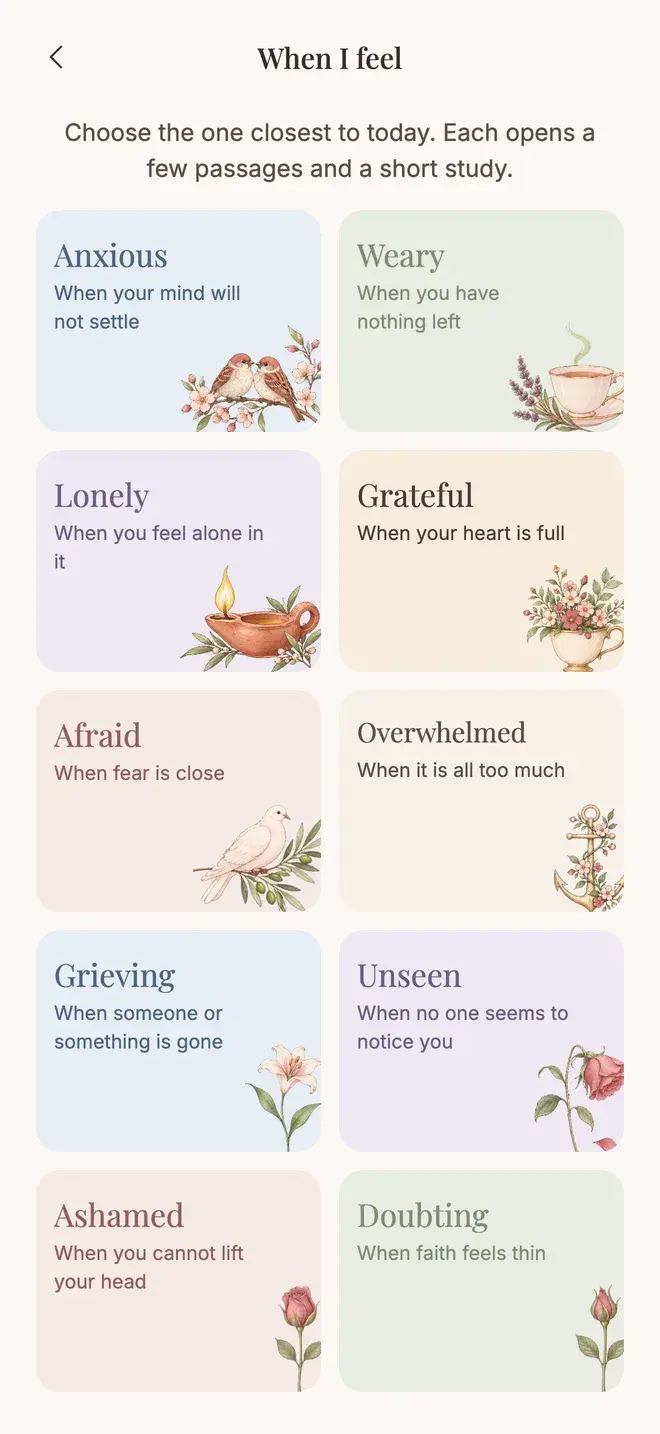
| A mind that will not settle | Bible verses for anxiety, then Psalm 131 |
| Dread about what might happen | Bible verses for fear, then Psalm 56 |
| A day that is simply too much | Bible verses for when you feel overwhelmed, then Psalm 61 |
| Loss and mourning | A Bible study on grief, then Psalm 13 |
| An empty house or a crowded one that still feels lonely | Bible verses about loneliness, then Psalm 25 |
Principles for a hard season
- Lower the bar. One verse is a full study today.
- Read the psalms aloud. Borrow the words when you have none of your own.
- Say the true thing. Lament is a form of faith, because it speaks straight to God.
- Do not carry it alone. Tell one person. Ask for prayer, a meal, a walk.
- Be careful with the cheerful verses. A verse used to silence pain is a verse used wrongly.
Scripture is never a reason to stay in danger. A few passages about enduring or submitting have been misused to keep women in harm, and God does not ask you to stay where you are being hurt. If you are not safe, your first step is a phone call to someone who can help: a trusted friend, a pastor, a counselor, or local emergency services if the danger is immediate.

Chapter 11
A rhythm that survives real life
Small, steady, forgiving
Women who keep a study habit for years usually build a version small enough to survive a sick child, a night shift or a lost week. They also forgive themselves quickly. A missed day is just a day. The habit survives by starting again.
A yearly shape
- Begin (months 1 to 3). Choose one Gospel and one plan. Build the five-minute habit.
- Deepen (months 4 to 6). Add a longer weekend session and one memory verse a week.
- Rest (months 7 to 8). Lighten the load on purpose. Summer, travel and newborns count.
- Return (months 9 to 12). Pick the study back up, review your journal and set a rhythm for the next year.
If you are a mother of small children
You will not get an hour. You may not get ten minutes without interruption. A devotional for busy moms is written for that reality, with short entries you can finish in a nap window or a carpool line. Take one verse, read it at breakfast, and let it travel with you. Faith can grow in an interrupted day.
If you are tired in your bones
Some exhaustion is solved by sleep and some is not. If you are weary in a way a night will not fix, Bible verses for weariness offer company in it, and a Bible study on rest explores the Sabbath, the invitation of Jesus to the weary and the permission to stop. Rest is part of the rhythm. If rest does not help, a doctor can check for causes such as depression, thyroid problems or anemia, and it is worth telling someone you trust.
A weekly plan you can start now
| Day | What to do | Time |
|---|---|---|
| Mon to Fri | One short passage, three notes, one prayer line | 5 to 10 minutes |
| Saturday | Longer study on one passage with the six steps | 20 to 30 minutes |
| Sunday | Worship, then review the week's notes and pick next week's passage | 10 minutes |
For a ready-made path through the Bible, a Bible reading plan and a Bible study plan take away the daily choosing. Fewer decisions make a habit easier to start.

Chapter 12
Tools, apps and resources worth your time
What helps and what to skip
Paper still works, and many women prefer it. Phones, however, are where much of life happens, and the right app can make the difference between reading on the train and not reading at all. The trick is to choose for the job. One app for reading, one for study and one for prayer is plenty.
Start with the job, then the app
If your first question is simply which app to download, begin with the general roundups. The best Bible apps list covers the field, while best Bible apps for women narrows it to women's study and devotion, and iPhone users can go straight to the best Bible apps for iPhone. A reading app should open fast, let you pick a translation and remember your place, which the best Bible reading apps do cleanly. If you want guidance rather than a blank page, the best Bible study apps add notes, plans and structure. Newer to all this? The best Bible study apps for beginners give clear starting points, and the best Bible study apps for women look at women's topics in particular. For a wider comparison of how apps help with depth, see the best apps to study the Bible. For a tablet, the Bible apps for iPad guide compares six.
For a daily habit and for prayer
A daily format lowers the choosing. The best daily Bible study apps bring one short study at a time, the best daily Bible studies for women focus on content written with women in mind, and the best daily devotional apps suit a shorter reading with a thought attached. For prayer, the best prayer apps are built around lists, reminders and a place to record answers, and the best daily prayer apps lean toward a regular rhythm. If you like to write, the best Christian journal apps are built for it, so check how entries are stored and whether you can export them.
The wider picture, and books
You may also want an overview of everything on offer. The best Christian apps list spans reading, worship, parenting and community, and the best faith apps list does the same for broader spiritual life. If your real goal is closeness to God, start with the best apps to get closer to God. Alongside any app, a good study Bible, a one-volume Bible commentary and a Bible dictionary will serve you for decades. Borrow them from a church library before buying. The aim is a small, trusted shelf. Read each with the same question: does this send me back to the text, or does it replace it?
To see what a single app can hold, the Bible app page lays out what to look for: a translation you trust, plans, a place to write and a way to pray.

Chapter 13
Begin tonight
The last chapter is a first step
Study is ten quiet minutes, a pen, a passage and an honest line to God, however long this guide has been. Everything else in these chapters is there to help that small thing last, deepen and become part of who you are.
You do not have to do it perfectly or start on a Monday. You do not have to understand everything. The writers of Scripture expected ordinary people to hear it and read it, and ordinary people, including women who felt unqualified, have been doing both for thousands of years. The Word is daily bread.
Your first night, in five steps
- Pick a place and a time you can repeat tomorrow.
- Open to Psalm 23 or the first chapter of John.
- Read it twice, slowly.
- Write one thing you notice, one question and one prayer line.
- Date the page and close the book. That is a study.
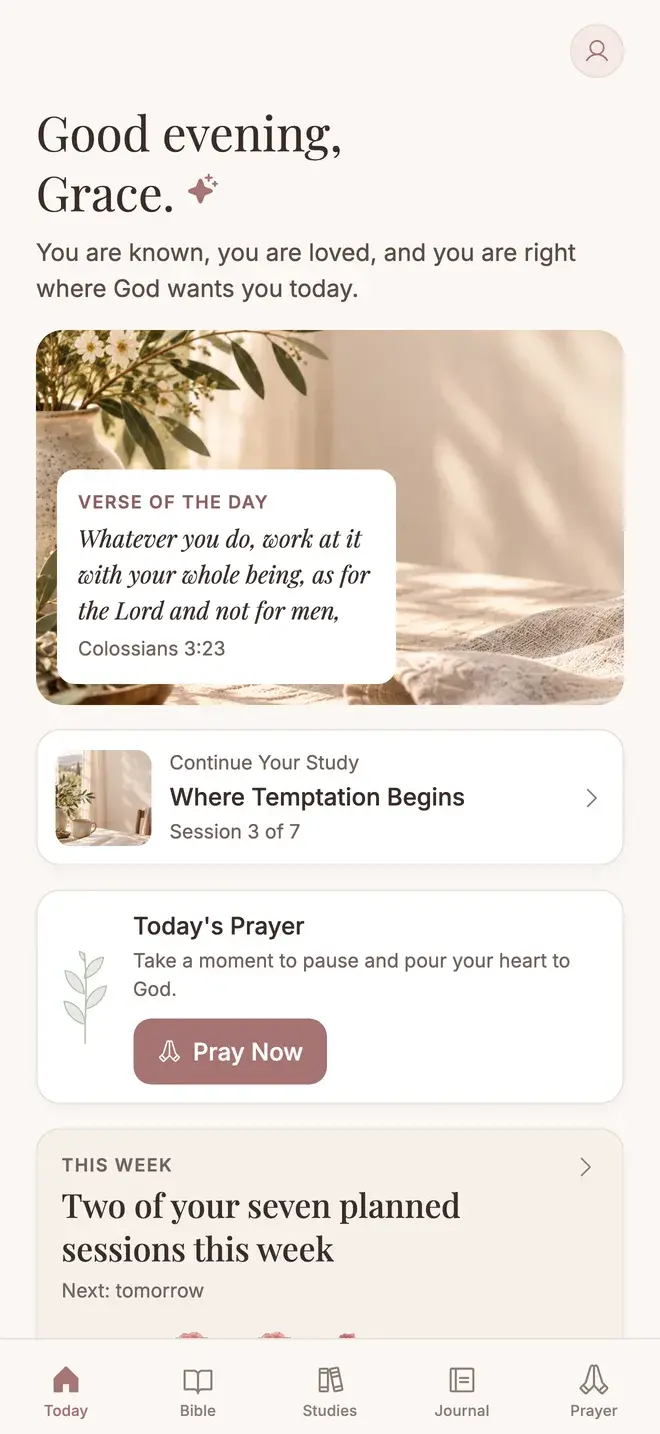
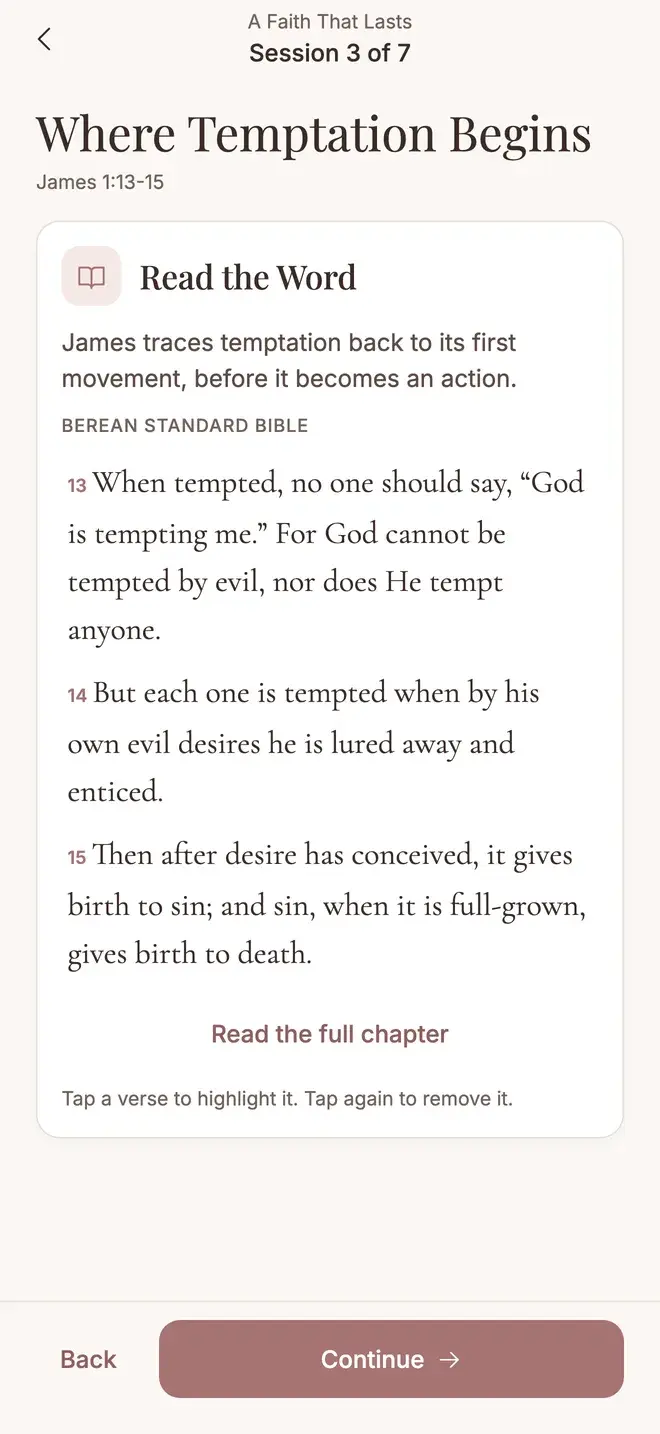
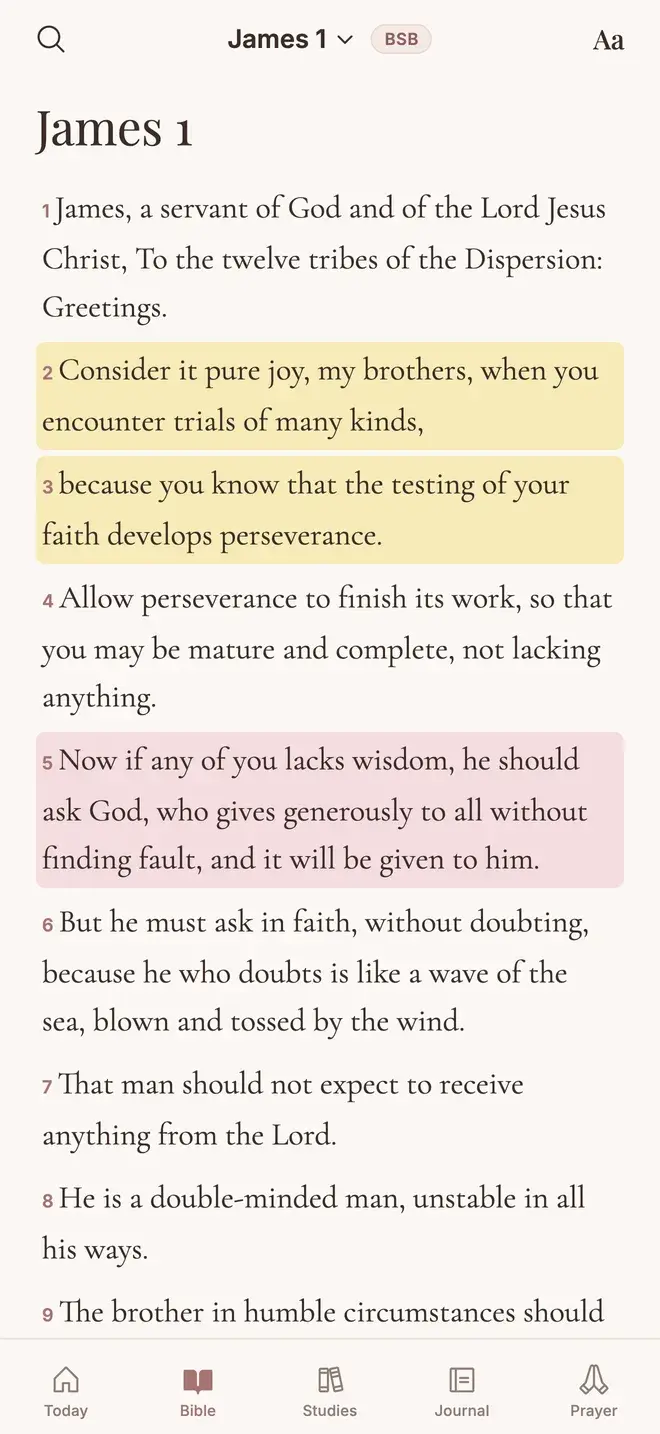
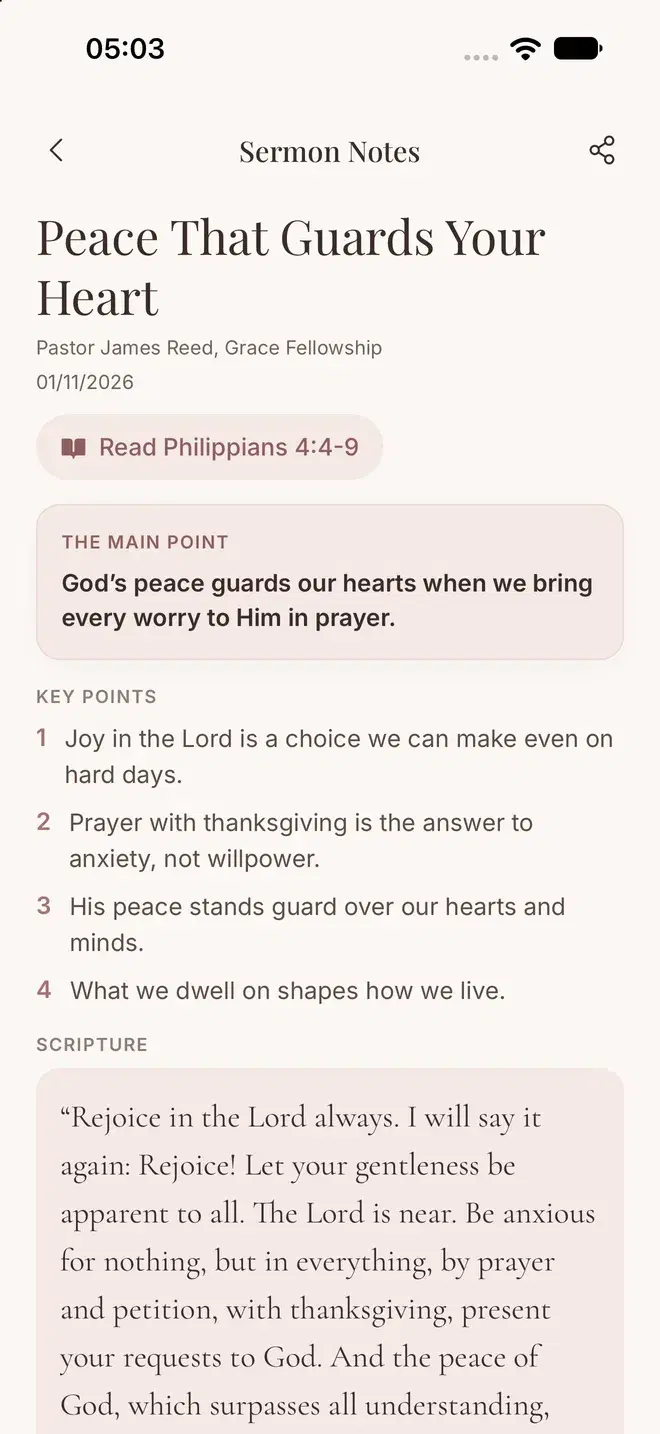
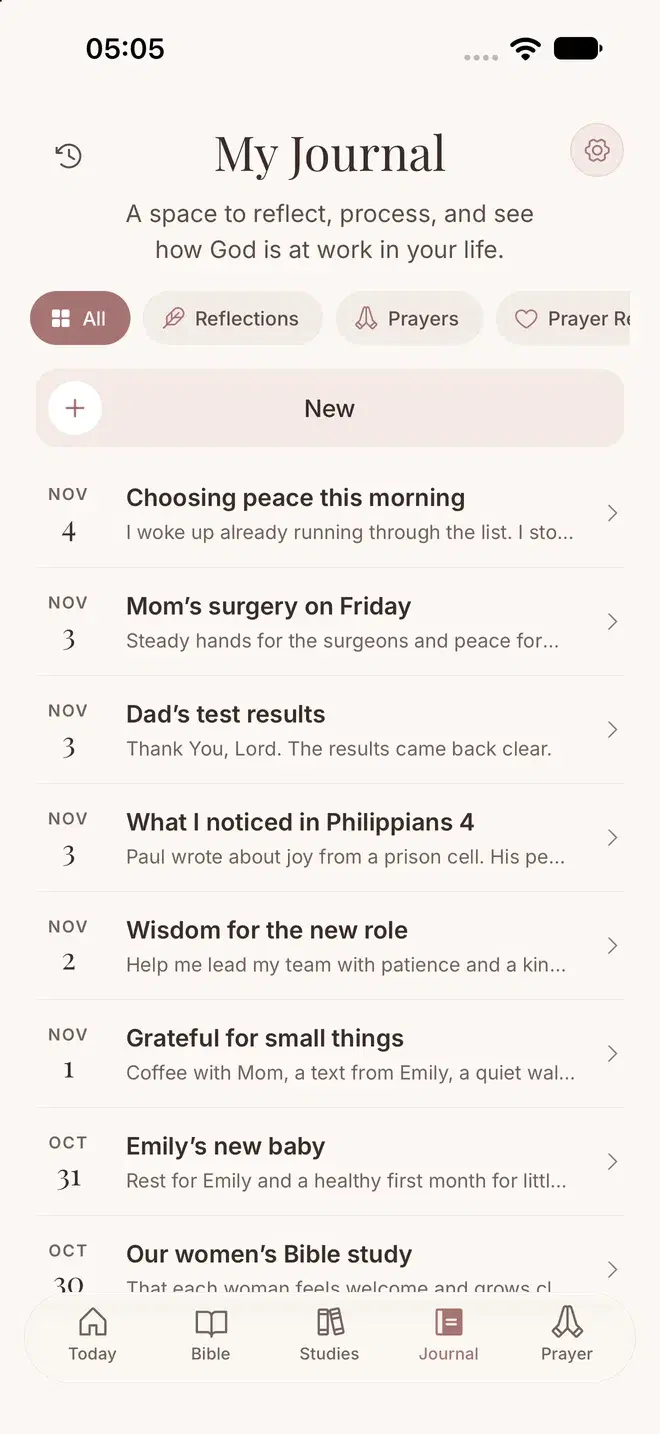
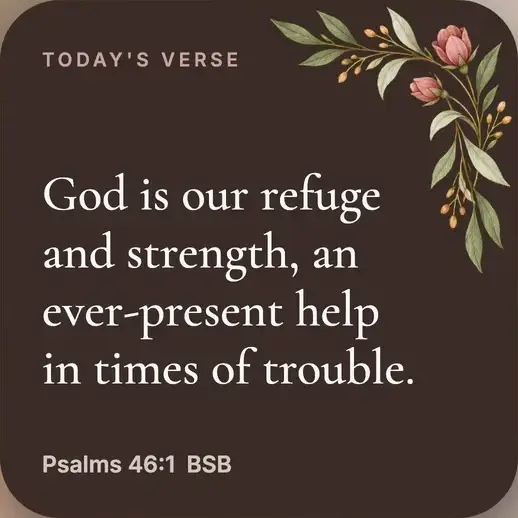
And if you would like the whole method carried for you on your phone, with a verse, context, reflection and prayer for each day, guided studies, a private journal and a prayer list, the Bible Studies for Women app is built for exactly this. It is on iPhone, iPad and Android.
Scripture quotations are from the King James Version (KJV), in the public domain.