


The short answer
A quiet time is a regular, unhurried time set aside each day to read the Bible and pray. To begin, choose a time and a place, read a short passage, write down one thing you notice, and pray for a few minutes. Fifteen minutes is a good length, and five is a real start.
- A 15-minute plan, with a 5-minute version for busy days.
- What to read first, and how to pray when words run out.
- What to do when it feels dry, and when you miss days.
- The meaning and history of the term, its biblical basis, and 10, 20 and 30 minute outlines.
Free quiet time guide and journal (PDF)
Outlines and pages to print. Free, with no email needed.

Free PDF · 10 pages
Quiet Time Guide and Journal
Outlines for a 10, 20 or 30 minute quiet time, tips for making it last, and seven journal pages to use with any passage.
Download free PDFNo sign-up. US Letter, prints on A4. 2.2 MB.

Free PDF · 14 pages
Free Printable Prayer Journal
ACTS prayer pages, a prayer list and an answered prayer log.
Download free PDFNo sign-up. US Letter, prints on A4. 2.5 MB.
A 15-minute quiet time
Settle (1 minute)
Phone on silent, a drink beside you. Say a short prayer: "Speak, Lord."
Read (4 minutes)
Read a short passage twice. Mark a word or phrase.
Reflect (4 minutes)
Ask what it says about God and what it asks of you. Write one or two lines.
Pray (5 minutes)
Thank, confess, ask. Pray for one person by name.
Carry (1 minute)
Choose a phrase to take into the day.
Quiet time for every kind of day
| Time | What to do | Good for |
|---|---|---|
| 5 minutes | One verse, one line, one prayer | Busy mornings, small children |
| 15 minutes | A passage, notes and prayer | A normal day |
| 30 minutes | A chapter, journal and longer prayer | Weekends |
| 1 hour | A study, a walk and prayer | A quiet Saturday |
What "quiet time" means, and where the term comes from
A quiet time is a personal, daily time with God built around reading the Bible and praying. Many people also call it devotions, a devotional time or time with God. Most quiet times include Scripture, some reflection and prayer, and many include a journal.
The practice is old and the name is fairly recent. In the late 1800s, student movements in Britain and the United States encouraged a "morning watch": time alone with the Bible and prayer before the day began. During the twentieth century, student and discipleship ministries such as InterVarsity and the Navigators spread the phrase "quiet time" through evangelical churches.
Older traditions shape daily prayer differently. Catholic, Orthodox and Anglican Christians often pray the daily office (set morning and evening prayers and psalms, also called the Liturgy of the Hours), and monastic communities practiced lectio divina, a slow, prayerful reading of a short passage. Many evangelicals favor a personal, Bible-centered quiet time. These are different shapes of the same desire to meet God each day, and many women borrow from more than one.
The biblical basis for a quiet time
Scripture gives no command to keep a "quiet time" by that name. It does show God's people meeting him regularly, often early and often alone.
Mark 1:35
After a full and demanding day, Jesus rose very early, while it was still dark, and went to a solitary place to pray.
Luke 5:16
As crowds grew around him, Jesus often withdrew to lonely places to pray. Luke presents it as his habit.
Daniel 6:10
Daniel kept praying three times a day at his open window, giving thanks, as he had done before, even after a law made it dangerous.
Psalm 5:3
David brings his requests to God in the morning and then waits expectantly for an answer.
Matthew 6:6
Jesus tells his followers to pray in private, behind a closed door, to a Father who sees in secret.
A 10-minute quiet time outline
- 1 minute
- Settle. Phone face down. Ask God to help you understand what you read.
- 4 minutes
- Read one short passage, such as a psalm or a paragraph of Mark. Read it twice.
- 2 minutes
- Write one line: what it shows about God, or what it asks of you.
- 3 minutes
- Pray: thanks for one thing, one request for yourself, one for someone else.
A 20-minute quiet time outline
- 2 minutes
- Settle and pray a psalm verse as an opening, for example Psalm 143:8.
- 6 minutes
- Read the next section of the book you are reading through. Note repeated words and anything surprising.
- 5 minutes
- Journal. What does it say? What did it mean to the first readers? What does it mean for today?
- 6 minutes
- Pray using ACTS: adoration, confession, thanksgiving and requests, including names from your prayer list.
- 1 minute
- Choose one phrase to carry into the day and write it on a card or your lock screen.
A 30-minute quiet time outline
- 3 minutes
- Settle. Sit quietly, then read a psalm of praise aloud.
- 10 minutes
- Read a full chapter. Read the key paragraph a second time in another translation.
- 7 minutes
- Study and journal: copy the key verse, look up one cross-reference and write two or three observations and one application.
- 8 minutes
- Pray through your [prayer journal](/prayer-journal): requests, answers to record, and people by name.
- 2 minutes
- Sit in silence, then close with thanks and one phrase to carry.
Common quiet time obstacles and practical fixes
| Obstacle | Practical fix |
|---|---|
| No time | Use the 5 or 10 minute outline. Attach it to something you already do, like the first coffee or the school drop-off. |
| Phone distractions | Use a paper Bible, or open only the Bible or study app and turn on Do Not Disturb. |
| Not knowing what to read | Pick one book and keep going until it ends, or follow a guided study so the passage is chosen. |
| Mind wandering in prayer | Pray on paper, pray a psalm line by line, or use ACTS as a simple order. |
| Not understanding the passage | Read the verses around it, compare a second translation and write your question down to ask later. |
| Small children | Read during nap time or after bedtime, or read a psalm aloud with them in the room. |
| Missed days | Start again with today's reading. No catching up, no guilt list. |
| Feeling dry | Keep it short and steady, change the place, and see the section below. |
What to read in a quiet time
Start small and keep going through the same book until you finish it.
- A Gospel. Mark is short and fast. Read a paragraph a day.
- Psalms. Good for prayer, and they cover every mood.
- A short letter. Philippians or James in a week.
- A guided study. If you want help, a seven-day study chooses the passage for you.
- Proverbs. One chapter a day through a month.
When a quiet time feels dry
Almost every believer has seasons when reading feels flat and prayer seems empty. That is normal and not a sign that you are failing.
Keep showing up, even briefly. Read a psalm of lament such as Psalm 13 and pray its words. Change the place or the time. Write what is true: "I feel nothing and I am here." A friend or pastor can help if it lasts.
If dryness comes with deep sadness or hopelessness, speak to a doctor or counselor as well. Asking for help is wise.
Tools to hold your quiet time
In the app
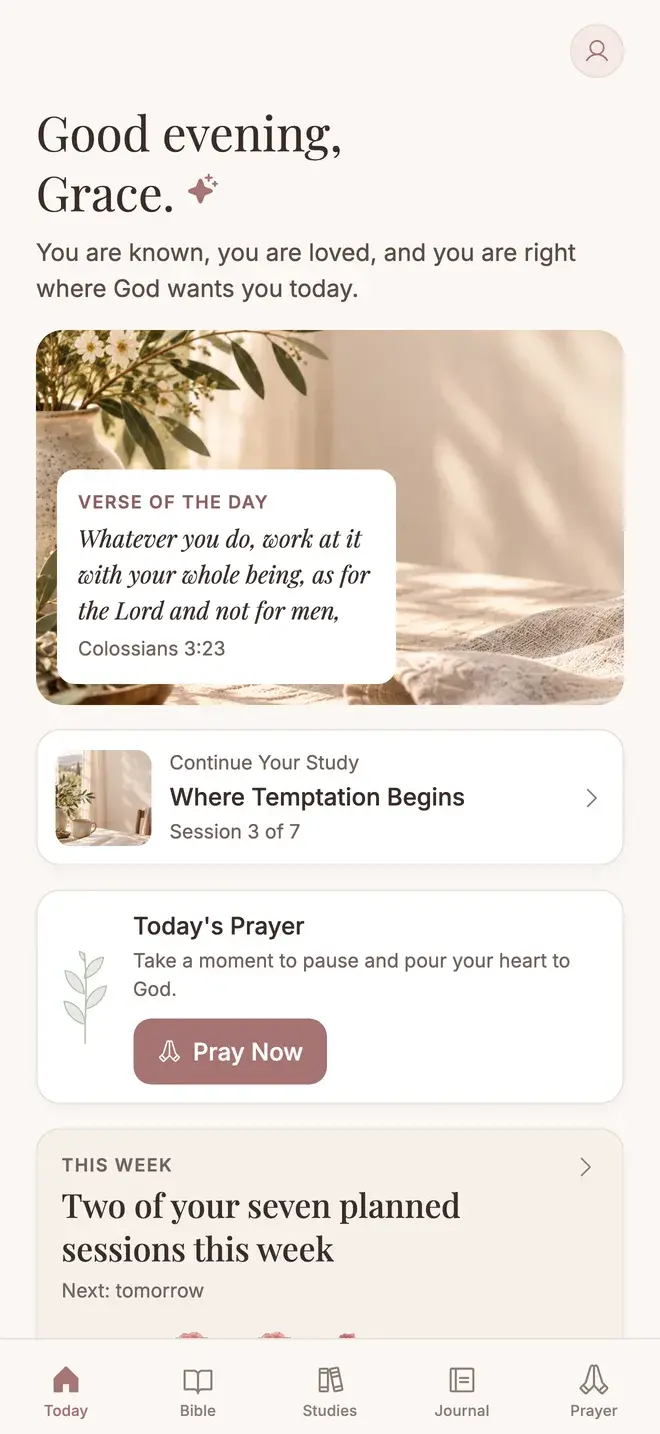
A quiet time that is ready when you are
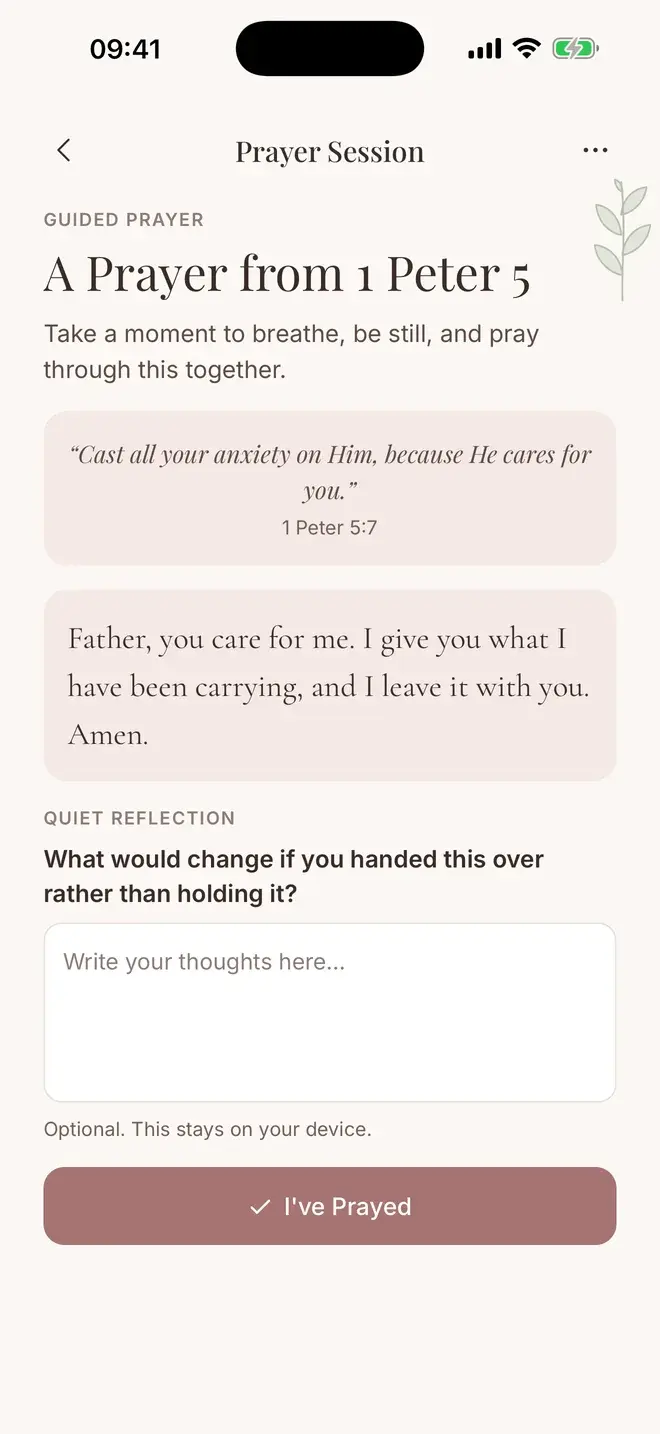
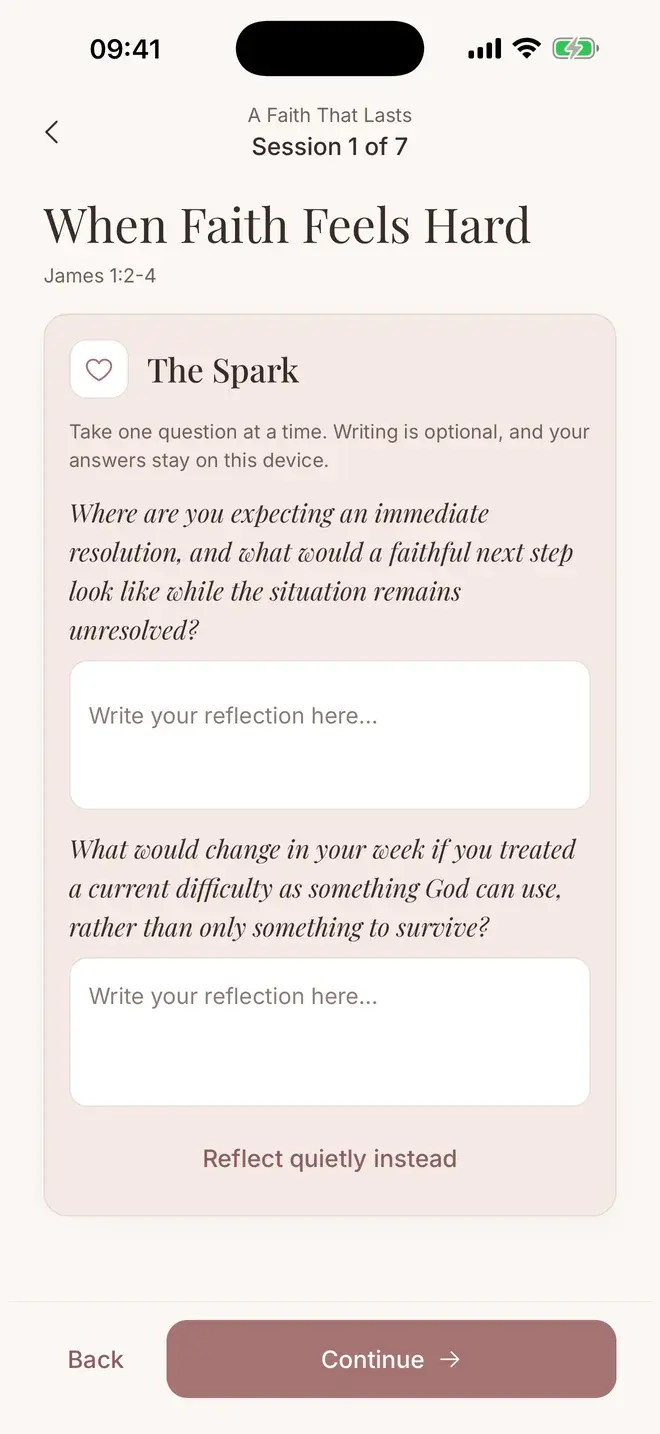
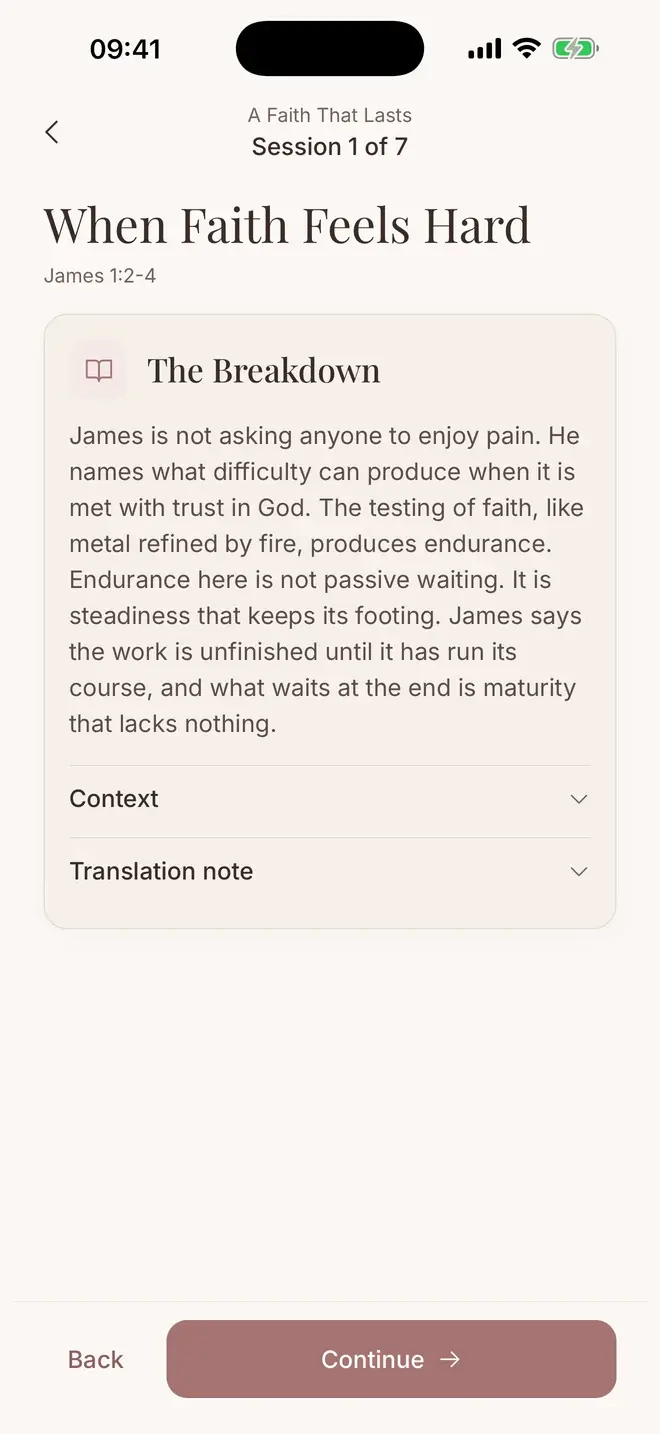
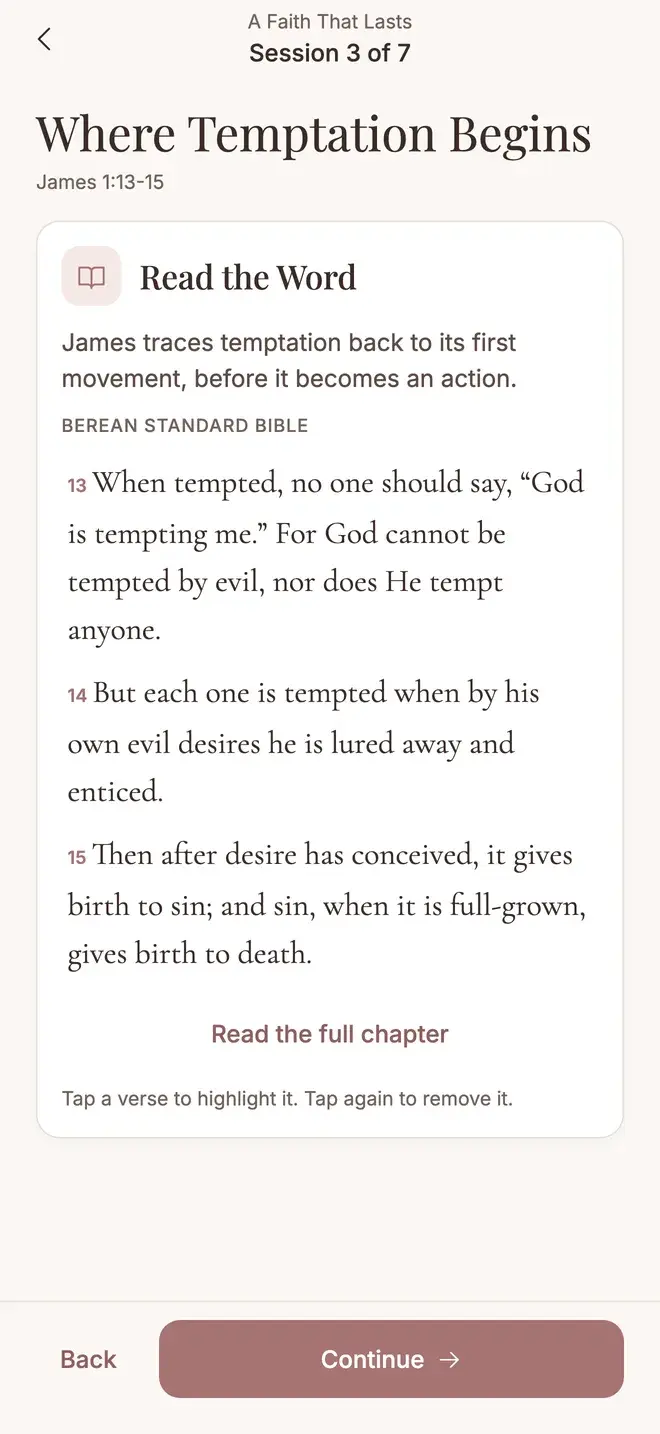
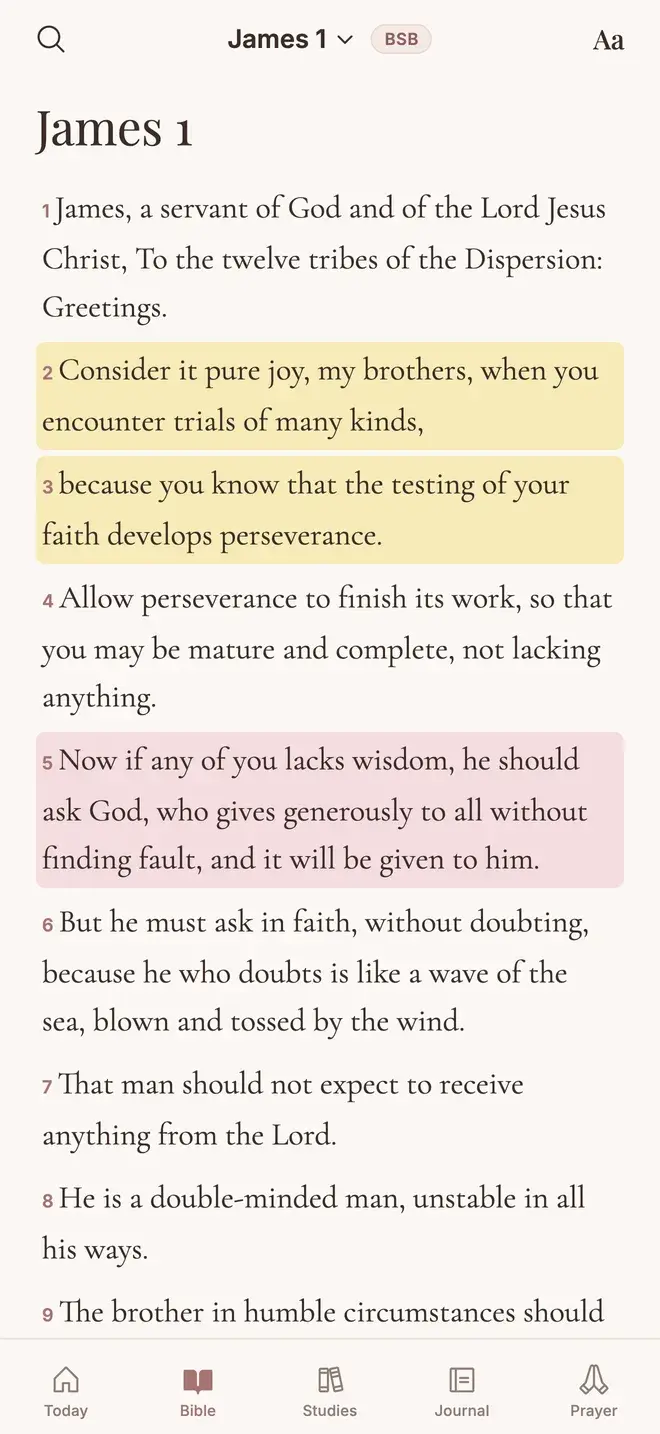
Bible Studies for Women gives your quiet time a shape. Open the Today tab and the verse, passage, question and prayer are set out, at the 5, 10 or 20 minutes you have.
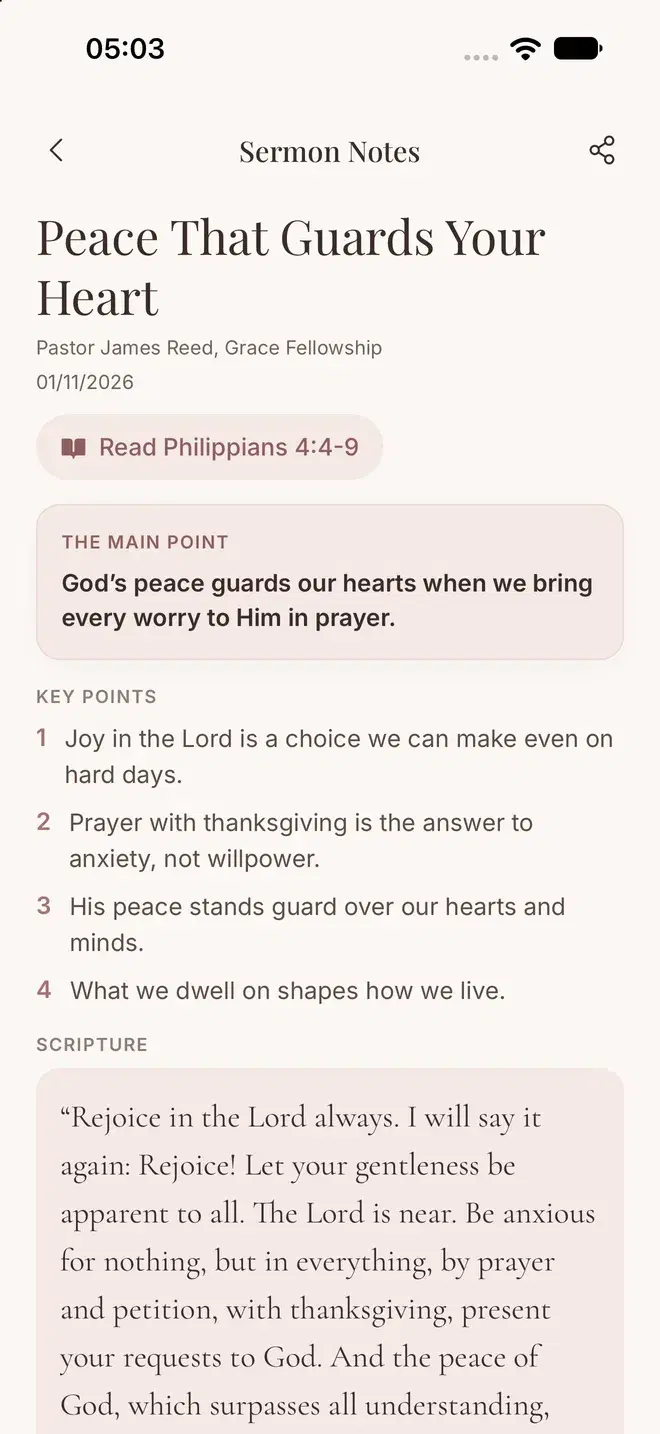
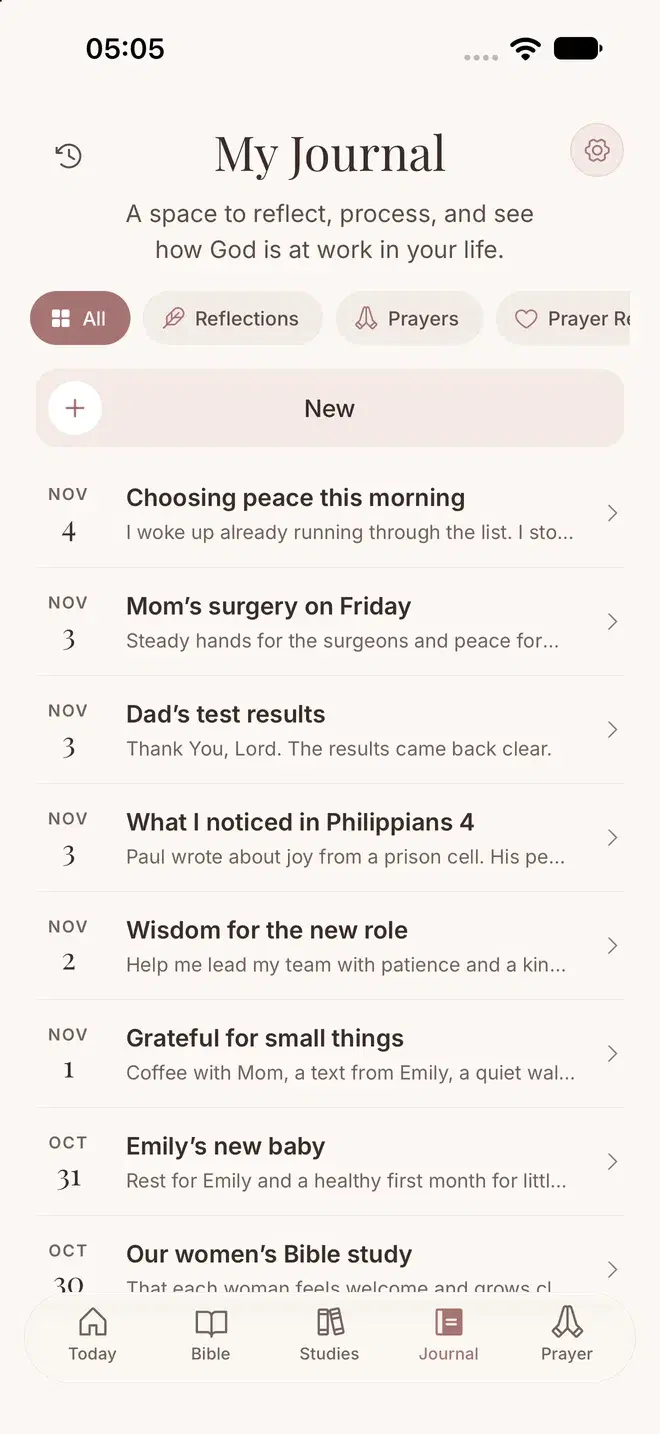
Choose the days and times that suit you, and the app reminds you gently. Your notes and prayers stay in a private journal on your phone.
- Sessions at 5, 10 or 20 minutes on the same passage.
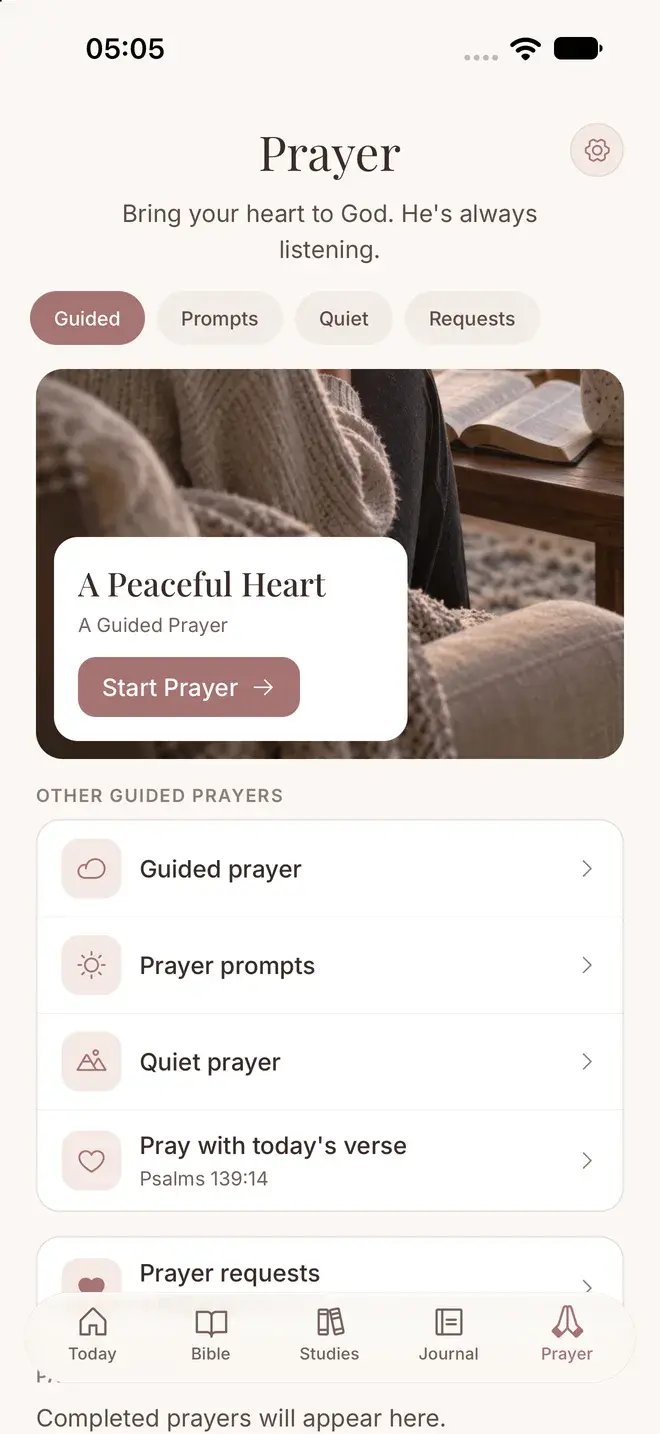
- Guided prayers and a quiet prayer mode.
- A rhythm you choose: daily, twice a week or weekly.
- Journal and prayer requests in the same place.